Chapters:
00:00 Intro
02:41 Is Satan Real? Father Lampert’s Answer
04:01 How Father Lampert Became an Exorcist
08:31 How Demonic Influence Begins
13:18 Chilling Stories From the Ministry of Exorcism
17:28 How the Church Determines Possession
22:22 Why Demons Seek to Possess the Human Body
35:48 The Devil’s Four-Stage Plan: Deception to Discouragement
38:32 Why Young People Are Returning to the Catholic Church
40:04 Why We Need God in a Secular World
43:07 Finding Meaning Through Detachment and Faith
44:30 The Devil’s Four Ds: Deception, Division, Diversion & Discouragement
48:53 Why True Happiness Can Only Be Found in God
52:28 Can Science and Faith Coexist?
55:18 Why Catholic Education Matters
1:00:33 Keeping Christ at the Center of Catholic Schools
1:08:20 Outro
If you are interested in our school, make sure to check out our website:
https://sjp2academy.com/
Follow us on social media:
Watch on YouTube
Instagram: https://www.instagram.com/sjp2academy/
Facebook: https://www.facebook.com/sjp2academy
X (formerly Twitter): https://x.com/SJPIIAcademy
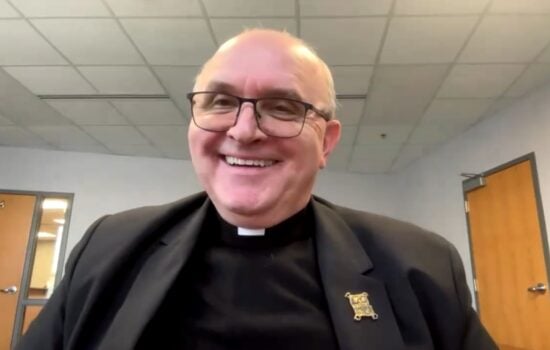
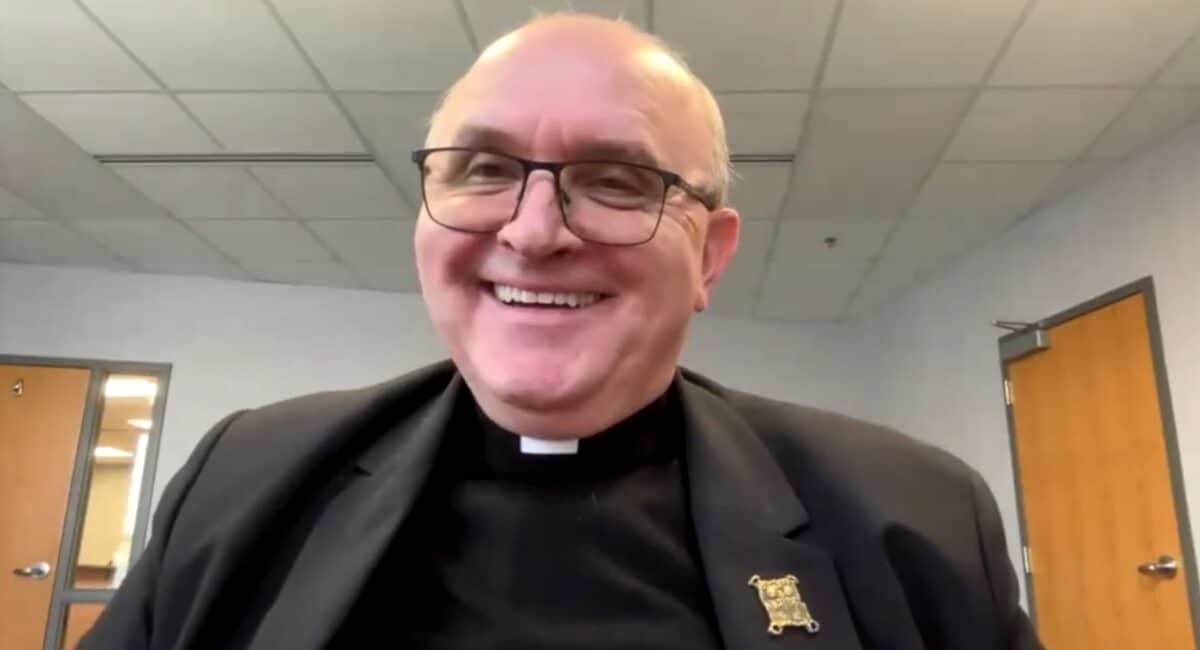
In this powerful conversation on Catholic Education Matters, Troy Van Vliet speaks with Father Vincent Lampert, a Catholic priest who served as a diocesan exorcist for 19 years, to discuss the reality of Satan, demonic activity, and the Catholic Church’s approach to exorcism. Father Lampert shares firsthand experiences from his ministry, explains how people can become vulnerable to demonic influence, and emphasizes the importance of prayer, the sacraments, and a strong relationship with Christ. He also discusses how the Church carefully distinguishes demonic activity from mental or physical illness, why a person must freely seek help, and the different forms of demonic influence. Perhaps most importantly, Father Lampert explains the devil’s four-stage strategy of deception, division, diversion, and discouragement, while reminding listeners that evil is never greater than God’s mercy and power. The conversation ultimately offers a message of hope, faith, and the importance of keeping Christ at the center of our lives.
Transcript:
[00:00:01] Intro: Welcome to Catholic Education Matters, the podcast that celebrates the beauty of Catholic education, highlighting excellence in academics, athletics, and the transformative power of faith. Join us as we share the stories of those making a lasting impact on Catholic education. Let’s begin.
[00:00:26] Troy Van Vliet: Welcome everyone to Catholic Education Matters. My name is Troy Van Vliet and I’m really, really excited today to have Father Vincent Lampert here with us to have a really a discussion that I’ve really been looking forward to for a while here now.
[00:00:43] So, Father, welcome and thank you for joining us here today. And I’m going to give, I’m just going to read out a quick bio a little bit about you and what you do and then we’ll jump right into it. But first of all, Father Vincent Lampert is a Catholic priest of the Archdiocese of Indianapolis who served for nineteen years in the Ministry of Exorcism, a role entrusted to him by his Bishop. Over nearly two decades, Father Lampert walked closely with individuals and families facing profound spiritual suffering, always grounding his work in prayer, discernment, and the authority of the church. Known for his calm clarity and deep pastoral wisdom, Father Lampert has spoken widely about spiritual warfare, the reality of evil, and the greater reality of God’s mercy, protection, and power.
[00:01:38] His ministry has never been about fear, but about truth, hope, and helping people understand the importance of living a sacramental life rooted in Christ. Although his formal appointment as diocesan exorcist concluded in November 2024, Father Lambert continues to share insights gained from years of experience, offering guidance to parents, educators, and the faithful who are navigating an increasingly confusing and secular world. His witness reminds us that while evil is real, God is infinitely greater. And the church has been given everything she needs to protect, heal, and lead souls to Christ. And that last little bit is comforting in this great world that we’re living in.
[00:02:31] So once again, Father, thank you so much for giving us your time today and I appreciate you tuning in all the way from Indianapolis.
[00:02:39] Fr. Vincent Lampert: Yes. Thank you, Troy. It’s good to be with you today.
[00:02:41] Troy Van Vliet: I appreciate it, I appreciate it. So we’re going start out, I’m going to ask you a question that I think many people, especially from the secular world, ask quite often: Is Satan real?
[00:02:58] Fr. Vincent Lampert: Absolutely. The Church consistently, from the very beginning of the Church, has taught about the reality of evil is personified in what we call the devil and these other fallen angels. So evil is not a metaphor. It’s not just humanity’s inhumane treatment of one another, but it is something real. And the Church consistently has taught that.
[00:03:22] I think we live in an age today where people may want to downplay the reality of evil, because the notion is if the devil doesn’t exist, then perhaps we have a free license to do whatever we want without any ramifications for the choices that we make.
[00:03:41] Troy Van Vliet: Wow. Okay. Well, that’s and coming from you, I mean, you’ve experienced it firsthand all the time, well, for the last nineteen years. Now, you’re not doing exorcisms anymore. And I know that’s a position that’s appointed by a bishop.
[00:03:57] You can’t just sign up for it as a priest, I believe. Is that correct?
[00:04:01] Fr. Vincent Lampert: Yes. You know, the the bishop is the exorcist in every diocese.
[00:04:05] Troy Van Vliet: Okay. In
[00:04:06] Fr. Vincent Lampert: chapter nine of Luke’s gospel, says that Jesus sent the 12 out and gave them authority over unclean spirits. So the bishops are the exorcists, and then the bishop in his diocese may appoint one or more of his priests to do this ministry in his name. So back in 2005, my bishop appointed me to this role, and then I was reappointed by various bishops over the years. And then back in 2024, the archbishop here in Indianapolis appointed another priest to take on that role. But I had the opportunity over that nineteen year period.
[00:04:44] I trained in Rome back in 2006, participated in 40 exorcisms that the Franciscan priest did who was training me, and it allowed me to learn firsthand the ministry of the Church for those who were up against the forces of evil and were seeking the help of the Church.
[00:05:03] Troy Van Vliet: That’s amazing. And as an appointment, must be if you’re dealing with evil all the time. I I don’t wanna say all the time, but you know, it it would it be a a draining thing? Would it be something that takes a lot of energy? Like, how does that I I can’t even imagine what it would be to be part of an exorcist to or to even watch, you know, what could be going on.
[00:05:29] But how is it? How do you handle that?
[00:05:33] Fr. Vincent Lampert: You know, I was ordained a priest back in 1991. So I got the appointment in my fourteenth year as a priest. And I would say the appointment really helped me to rediscover priesthood as a vocation as opposed to an occupation. We live in an age today where priests are pulled in many different directions, maybe have multiple assignments, and we can begin to see what we do simply as a job, as that occupation. But the appointment really helped me to see priesthood as a vocation, and by that word I mean a calling from God.
[00:06:11] We do what we do because God has called us to do it. You know, in those nineteen years I encountered literally thousands of people who were up against the influence of the demonic world. And I will say it does change the priest’s outlook on life in general, on the priesthood, begins almost like you operate and look at things on a different level. It’s no longer kind of business as usual, because when you deal with kind of the preternatural world on a regular basis, it really just really kind of changes you on the inside. Without being really grounded in prayer and spirituality, it can really kind of just really cloud your whole outlook on life in general.
[00:07:00] But I would say that doing the ministry, staying rooted in God and my priestly identity, is what helped me to do the job for so long.
[00:07:10] Troy Van Vliet: I can imagine. That’s why I was saying, you know, it being a draining and mentally taxing on you. Can I can, like I said, I can only imagine? Now you’re not limited, as a Catholic priest to just do exorcisms for Catholics, I’m assuming?
[00:07:32] Fr. Vincent Lampert: No. The Yeah. The church recognizes the ministry of exorcism as a ministry of charity. So the church would help anyone who would turn to her for help. So over the years, probably half the people I talked to were Catholic, the other half came from other Christian faith traditions, other world religions, some from no faith background whatsoever.
[00:07:56] But the ultimate goal would be to provide pastoral care for those who are up against the forces of evil, and to do that in a charitable way.
[00:08:07] Troy Van Vliet: So what I guess I guess there’s no typical exorcism. I’m sure they’re all different. But if you had to kind of sum it up maybe in as a, I guess, a process that we can maybe relate to, is there some can you give us a description of what a case could look like or an episode could look like? Yeah.
[00:08:31] Fr. Vincent Lampert: I would say a basic definition of exorcism would be that the devil is commanded to return that which he has stolen, namely a person created in the image and likeness of God. So in working with someone, I would always want to determine what was the entry point. What did the person do, either directly or indirectly, that opened the doorway for the demonic to enter into their life? Because ultimately, especially as Catholics, if we are going to Mass, if we are praying, if we are reading the Bible and celebrating the sacramental life of the Church, the devil is already on the run. We don’t have to do anything extraordinary to defeat the devil.
[00:09:15] But sometimes today, especially in the world today, people don’t take their faith seriously. Maybe they just go through the motions or people have fallen away from the church, they no longer practice their faith. And I always say that faith in God will lead us in one direction and the lack of faith in another. So when I work with somebody, I want to know what that entry point was, and then being able to identify that, then using the Ministry of Exorcism, it would be to close that doorway and to bring someone into a right relationship with God. I would even say that casting the demons out is the easy part.
[00:09:56] It’s convincing a person to have that consistent relationship with God that is the harder part. Because sometimes when people are in a crisis mode, they’ll do anything you ask them to do, but then once the crisis passes over, then they may lapse back into those old patterns again that may have invited the demonic into their life in the first place.
]00:10:20] Troy Van Vliet: Okay, so you had said So I get it. The devil can be cast out, but can be invited right back in again?
[00:10:28] Fr. Vincent Lampert: Yeah, because the devil knows. He can watch and observe us, know our weaknesses, and then try to present that. There’s even a classic line in Luke’s Gospel where it says, Once the demon has been cast out, it goes and wanders through the arid wasteland, and coming back and finding the house swept clean, it goes and finds seven other demons worse than itself, and they come and take up residence in the person. The notion of being swept clean is that it’s been cast out, but God hasn’t been invited in. And if God is not invited to fill that void, then the demonic may try to intensify his attacks against that person.
[00:11:08] Troy Van Vliet: That makes perfect sense. You had said, direction, but the lack of faith in God will lead us in another.
[00:11:19] Fr. Vincent Lampert: Absolutely.
[00:11:20] Troy Van Vliet: Those are wow. Those are beautiful words. So simple, but profound. And we we need that in there. And that’s that example of what you had just said is that you can cast out a demon.
[00:11:33] That might be your your faith in God, but if that doesn’t continue, your lack of faith will lead you in the wrong direction or invite evil back in again. Always on the prowl.
[00:11:49] Fr. Vincent Lampert: Well, there’s the line too, in Saint Paul, when he writes to the Corinthians, says that Satan transforms himself into an angel of light and deceives many people. I think there’s a lot of people today that don’t really believe that a relationship with God really does them any good. Because I encounter a lot of people that say, Well, I’m spiritual, but I don’t go to church, don’t really practice any religion.
[00:12:15] Troy Van Vliet: Yeah. If somebody says that to me, quite often I’ll say, what does that mean that you’re spiritual? What exactly does that mean? And usually, confusion, you know, will, set in at that point. Because they’re you know, you get people to question that and they’re like, yeah, well, what exactly does that mean?
[00:12:35] I guess it means I might believe in God. I’m not an agnostic, but I just don’t have any religion or I am an agnostic or not really sure if God exists, not really sure if God doesn’t exist. But I think there’s something, you know, and so I’m spiritual in that regard, which I always think is a bit of a cop out for people that don’t want to put the energy into their faith and learn more about it. Do you have an example that maybe you want to share or two even that of evil at work and how you were able to intercede and help the situation.
[00:13:18] Fr. Vincent Lampert: People need to understand that the demonic is always about fracturing and breaking. When we think of Christ, we think about unifying and bringing together. So the demonic would always want to fracture our lives in such a way that maybe we can’t put the pieces back together again. So many of the people that I dealt with in the Ministry of Exorcism were people who had fractured their lives for various reasons. There was one lady that I worked with who told me that growing up, she was a victim of abuse, sexual abuse by her father.
[00:13:54] She felt abandoned by God, blame God for allowing this to happen. And then she entered into the world of the occult that believing that somehow that would help put the pieces of her fractured life back together. But ultimately it only broke her even more. And then she believed that she became possessed. So she’s telling me this story.
[00:14:16] She begins to sob and she says, will you help me? And I said, Jesus is the one who can help you. And when I said that, her eyeballs turned green. Her pupils became slanted like a serpent. And then this voice comes out of her mouth and says, Who’s he?
[00:14:32] He has no power over us. And then the demonic began to mock me and said, You can’t get rid of us. We’ve been here too long and you’re not strong enough.
[00:14:44] Troy Van Vliet: Wow.
[00:14:46] Fr. Vincent Lampert: There was another person I worked with where seven demons named themselves in this person. The person had been praying outside of an abortion clinic and ran up to a woman going in believing that this woman was possessed. And she looked her in the eye and said, Whatever in you, I freely invite to come into me. A misguided notion of charity. And no sooner did she say the words that she felt something come over her.
[00:15:14] For the next twelve years, she experienced demonic attacks and afflictions. Her husband would say that she would sit up in the middle of the night, begin speaking in strange languages, talking in a very deep authoritative voice. And then when I worked with her, seven demons named themselves, and the dominant demon was the demon Abadin mentioned in the Bible, which means the destroyer. So it’s interesting that she encountered a demon associated with destruction outside of an abortion clinic where human life was being destroyed. So again, always trying to figure out what the person did that opened the entryway for the demonic into their life so that through the prayers of the church, I can work on closing that doorway.
[00:16:05] Troy Van Vliet: Oh my goodness. I’m stunned to hear that happening in such a like, wow, how do they reveal themselves? You said there were seven demons that revealed themselves through this one woman. Is that through they’re or they use her voice to do it, or how does that happen?
[00:16:26] Fr. Vincent Lampert: Whenever someone’s possessed, then the demon takes control of the person’s body, treating that body as if it were its own. So using the person’s mouth to speak, their eyes to see, their arms and hands to give gestures. So whenever a demon manifests, I would no longer say the person as an individual did this or said that all the actions of that body are now being wholly defined by the demon.
[00:16:56] Troy Van Vliet: Wow. So if somebody is possessed, can they do things that they would normally do or is that what happened? Like commit a murder or something or act out angrily or like what does that look like? And Mhmm. You know, we’re The church.
[00:17:20] Talk about temporary insanity. Is that a form of possession or?
[00:17:28] Fr. Vincent Lampert: It’s a very methodical process. So anyone who believes they’re dealing with a demonic first has to have a psychiatric evaluation to rule out any mental cause. They need to have a physical examination by a medical doctor to roll out any physical cause for what they’re experiencing. And then I would ask these experts to kind of weigh in, you know, is there something about this person’s condition that is outside of your level of expertise? So I’m not asking the doctor or the psychiatrist if they think someone’s possessed.
[00:18:03] I will make that determination, but I want the best possible information that I can get. Because ultimately the church says that I need to have moral certitude that beyond a doubt that the person in front of me is truly possessed. Because if the church labels someone as being possessed and that label prevents them from getting the true help they need, either from the mental health or the, physical, you know, help from a doctor, then the church would be causing greater harm. So again, always very methodical. The church is never quick to, you know, rush into a judgment, but ultimately to give the person what they truly need, either from a mental, spiritual or physical help.
[00:18:52] Troy Van Vliet: So when you were called in, I mean, you could be called in by Medicare or psychiatric ward or something like that. Could you be called in? We don’t know what’s wrong with this person. Can you do an evaluation as well? Would that happen?
[00:19:11] Yeah,
[00:19:13] Fr. Vincent Lampert: because the person could ask for help for themselves or they might be referred by a family member or a friend. And I can meet and I can evaluate. But ultimately, if someone’s truly dealing with the demonic, they have to make the choice to ask for help, because we all have free will. Just as much as we can invite Christ into our life, we can also tell them to get out. And God will always respect the choice that we make.
[00:19:40] So an exorcism cannot be performed on anyone against their free will. They have to want the help from the church.
[00:19:49] Troy Van Vliet: Okay. So can you would there be somebody that is so possessed they don’t want help and therefore you cannot help them? Like, there’s nothing you can do. Like, do you have to find that that unpossessed moment or that’s that danity that that they might say, yes, I want your help. And then Mhmm.
[00:20:14] Fr. Vincent Lampert: Yeah, because if a person is possessed, it doesn’t mean that they’re manifesting the demonic 20 fourseven. It means that the person did something to create a connection between themselves and a demon. And then the prayer of the church is meant to break that connection. So a person isn’t manifesting all the time, and it could be at a time when the demon is kind of dormant, so to speak, that the person could seek help from the church, recognizing that there is a demonic influence at work in their life. And even the manifestations we see, people may have seen different movies about exorcisms.
[00:20:56] Know, demons are very egotistical. They cannot accept the fact that they’re being commanded to do something by a creature that they consider to be inferior to themselves. So actually the prayer of the church is meant to trigger the manifestation because the demon really would prefer to remain hidden. Because once he reveals himself, then the fight against him begins. But again, they reach the point where they just cannot tolerate that somebody is commanding them to do something, that they begin to lash out.
[00:21:31] And it’s always in an animalistic nature. You’ll hear howling and screamings and whatnot. And all of that is meant to instill fear because if the demon can get someone to live in fear, then they can be controlled. But the church always wants to look for examples of true demonic possession, whether it’s the the ability to speak and understand languages otherwise unknown to the person, superhuman strength beyond the normal capacity of the individual, having elevated perception, knowledge about things that I know that that person should not otherwise know. So all of these would let me know that I’m no longer talking to that person as an individual, but now to a demon that’s using that body as if it were its own.
[00:22:22] It’s always a good question too to ask people, Why would a demon be interested in possessing a human body? And the answer is really at the core of our Christian faith. The greatest thing that God did for us is the incarnation. God took on human form in the person of Jesus. And because the devil wants to mimic God in every possible way, he believes that he takes on human form by possessing a human body.
[00:22:48] But when he does so, he distorts the human person. The human person is God’s greatest creation. We are created in God’s image and likeness. But then the demon wants to distort that and make the human being appear to be something hideous and grotesque. That’s why, again, you see the foaming at the mouth, the growling, the snarling, the eyes rolled in the back of the head.
[00:23:13] All of this is meant to really mock the human person because in doing so, the demon believes that he’s indirectly mocking God himself.
[00:23:24] Troy Van Vliet: Oh, wow. That’s a lot to take in right there. My goodness. You’re talking about the growling and eyes rolling in the back of the head or eyes turning green and things like that as a mockery of God’s creation in humanity. Do people that are possessed, do they remember that?
[00:23:51] Or the foaming at the mouth? Is it like an episode if it’s not something that’s consistent? I mean, it can’t be consistent. Otherwise, there wouldn’t be an opportunity for somebody to say, I’ve got problems and I need your help on You know? So, but do they remember these times when they’re taken over?
[00:24:13] Fr. Vincent Lampert: It depends on the individual. I’ve worked with people that remember everything, that once the demon takes over, they tell me they’re like a prisoner trapped in their own body, powerless to stop anything. And then others tell me that once the demonic takes over, they no longer have a recollection of anything that takes place. So it really depends on the individual.
[00:24:37] Troy Van Vliet: And how do you know if that somebody is just toying with you?
[00:24:45] Fr. Vincent Lampert: Exorcists always have a few tricks up our sleeves, so to speak. Like when you meet with somebody, might bless them with holy water. Yeah. But maybe it’s just tap water. Maybe the water hasn’t been blessed.
[00:24:59] That person as an individual won’t know that. I will know that. Yeah. The demonic will be able to detect something that’s sacred. Because then again, that’s another sign of the demonic is an aversion to something of a sacred nature being blessed with holy water, having scripture read in front of them, a crucifix placed on their head during a prayer.
[00:25:24] So if I bless somebody with tap water and they begin to howl and scream, then it might be an indication that they’re just putting on an act or that there’s a mental health issue at play. Because again, I know whether it’s been blessed, the demon will know, but that person as an individual will not. Sometimes I meet with people, I may even have the blessed sacrament and a pix in my pocket. And I don’t even reference it, but the demonic will know that the Eucharist is present and will begin to lash out. The exorcist before me, here in the Archdiocese of Indianapolis, he died in 2005.
[00:26:06] He used to visit patients at a mental hospital here in Indianapolis. And he would say that when he would go in to take communion, many of the residents would curse and spit at him when he would come through the front doors. But then when he would leave, they were like, Have a good day, Father. Thanks for coming in. It’s good to see you.
[00:26:24] And he said the only difference was he no longer had communion with them because he had distributed it. And he believed that some of these people were actually possessed and the demons were reacting to the presence of the Eucharist that he was carrying on his person to make those communion rounds.
[00:26:43] Troy Van Vliet: Interesting. Interesting. And very believable. If people are possessed, then that would be something that they know, that they can feel. So, I love the holy water trick.
[00:26:58] That’s beautiful. Go ahead, flush it out. Can anyone cast out demons? Does it have to be a Catholic priest? Is there different levels that, say, any evangelical maybe isn’t getting anywhere and then they would call on a Catholic priest.
[00:27:23] Is that something that that happens or no? Or could I say from somebody
[00:27:30] Fr. Vincent Lampert: I would say from a Catholic perspective, we would say that they’re truly efficacious within the ministry of the church. Because again, if bishops are the successors to the apostles and Jesus gave the apostles the authority to cast out demons, then that power has now been passed down to all the bishops throughout the world. Certainly I think that the church doesn’t have a monopoly on the practice of exorcism. One may encounter somebody who’s really genuinely committed to Christ. Because ultimately, in an exorcism, Jesus is not a bystander.
[00:28:06] He’s the main actor. The priest that trained me many years ago before I left Rome I lived there for three months He told me, If you’re ever doing an exorcism and for a split second you think, Wow, look at what I’m doing. He said, You’ve just walked on unholy ground. Because it’s not you, it’s you acting in the person of Christ. So again, Jesus is the main actor.
[00:28:30] So I would always tell people, if you’re relying on me as an individual, we’re all in trouble. But if we’re relying on the power and the authority of Christ that he has given to his ministers, then that’s the right mentality to have.
[00:28:44] Troy Van Vliet: Right. Got it. Here’s a question for you. People that there are Satan worshipers on the in on the planet. What are they all considered to be demonic or are they considered to be possessed?
[00:29:05] Or do we have an outlook towards that at all? Well, obviously a negative outlook towards it. But when it comes to being possessed, is that something that you could almost assume that somebody that worships Satan is?
[00:29:22] Fr. Vincent Lampert: Because people then are directly inviting Satan into their life. Now there are people that are true Satanists. There are some people that kind of use that label just because they want to eliminate religion from the public forum. So they may say they’re a Satanist just for shock value. But then there are people that actually engage in satanic worship and rituals.
[00:29:48] There’s something known as perfect demonic possession, whereby somebody freely submits their free will to the demon, that they would no longer actually be any manifestations. Because the ultimate goal of the Christian life would be for us to unite our free wills to God’s will. But it is possible for somebody to unite their free will with that of the devil. And in those cases we would say that’s perfect demonic possession.
[00:30:21] Troy Van Vliet: Wow. Where they basically where they fully ended themselves over. Yes.
[00:30:26] Fr. Vincent Lampert: And so, you know, manifestations are an indication that there’s still an internal struggle taking place, but perfect possession, there would no longer be any manifestations because the person has completely submitted to the devil. There was an elderly man here in Indianapolis who had really no faith background whatsoever. His family belonged to Christian church, and they were worried about him when he would die because he was getting advanced in age. But when I went to visit him, he told me that throughout his life he had made relationships with demons, And when he died, it was his hope to spend eternity in hell with Satan and these other demons that became his friends. And of course, the family is listening to this, and they’re like, Father, what do we do?
[00:31:19] What do we do? I said, Well, we can pray for him. We can’t do exorcisms on him because he doesn’t want that. But we can pray that he has a change of heart. Because as long as there’s a breath in our body, we can always make the choice for Christ.
[00:31:34] We can repent from the things that we have done. Just actually listening to somebody tell me that they wanted to spend eternity in hell with Satan was of a crazy thing to hear.
[00:31:48] Troy Van Vliet: Is there any reasoning with somebody like that? Like, can you We can’t just give up on people, but I guess praying for somebody is not giving up on them.
[00:32:01] Fr. Vincent Lampert: We pray for them. I had a conversation with him. He even let me pray, but he said it really won’t do you any good because he goes, I just reject it.
[00:32:09] Troy Van Vliet: He’s not open to it at all. Yeah. Nope. And there’s
[00:32:13] Fr. Vincent Lampert: another young man, another young man told me that once he declared Satan to be his father, that he found such a strength. He goes, it’s so exhilarating and addictive. He goes, I could just never let that go.
[00:32:29] Troy Van Vliet: Well, addiction in itself is a form of evil, is it not? And is it a form of possession?
[00:32:43] Fr. Vincent Lampert: It could be an entry point for that. You know, the devil is not the cause of all of our problems, but the devil is an opportunist. He can always try to insert himself into the situations in which we find ourselves. Because again, the devil is all about death and destruction, breaking the bits and pieces. And our faith is all about life, communion, unity with God.
[00:33:12] And the devil ultimately wants the human person to make the same poor choice that he himself has made to reject God. It’s the notion that misery loves company. So the devil wants us to join him in his misery. But he presents that misery as something good and he lures people in. And then once people get into that realm, they begin to see the devil for who he truly is.
[00:33:42] Troy Van Vliet: So there’s the temptation, which is. I mean, it can be cloaked in good and but then it’s the purest form of evil like like society spins things so much. It’s just like abortion. Like it’s spun as a human rights for women and the freedom to do what I wish with my own body, that type of thing. So it gets they take all of these things that are good, these labels that are good, and then they they spin it.
[00:34:19] And all of a sudden, you know, all of a sudden in today’s world, up is down, left is right. Good is evil. And in a way it goes. Paul Harvey wrote long time ago, if I were he he wrote that quote, if I were the devil, and he did a transcript transcript for it. Are you familiar with that?
[00:34:41] I’m not. No, I’m not. No? Okay. It’s actually it’s really quite amazing.
[00:34:47] And it’s all the most subtle ways of how and it’s fairly long, that’s why I’m not gonna read it out. But how the devil works in the most subtle of ways to change the world. You know, how do you eat an elephant? You do that one bite at a time. And the devil works in the same way.
[00:35:08] Where it’s the little, you know, it’s using cuss words, things like that, that are just a little entry point into the devil himself, you know, and then things just can roll on, roll on and roll on from there. But it’s actually a great example. You know, If I Were the Devil, he lists all these obvious things in life that you just kind of go, we take all that stuff for granted and that is all the purest form of evil. And which can lead to possession, which I guess is the devil’s ultimate goal is to steal your soul.
[00:35:48] Fr. Vincent Lampert: I would say that, yeah, we’ve talked a lot about possession. That would be the extraordinary activity of the devil, whether it’s a demonic infestation, the presence of evil in a location. There can be demonic vexation, which are physical attacks. There can be demonic obsession, which are mental attacks, then demonic possession itself. But those are extraordinary signs of demonic activity.
[00:36:19] But what you’ve been talking about from that comment from Paul Harvey is really what I would call the ordinary activity of the devil. How he tries to trip us up in our daily lives. And when it comes to that, I believe the devil has a four stage plan of attack. They’re all words that begin with the letter D. It begins with deception, which leads to division, which leads to diversion, which leads to discouragement.
[00:36:45] So the devil in our daily lives, like you said, he wants us to believe that up is down and down is up. So with deception, he distorts reality. He turns things inside out. Whenever we give into the devil’s deception, we need to repent. But when we don’t repent, it leads to division.
[00:37:06] We find ourselves broken. And when we find ourselves broken, we should repent. But when we don’t, it leads to diversion. We look for something that we believe is going to help put the pieces of our lives back together. But ultimately, if that’s not God, then it’s only going to fracture us even more.
[00:37:25] And then ultimately that will lead to discouragement. And when people arrive at discouragement, it’s a crossroads. We have a choice to make. One pathway leads to death, always spiritual, the complete rejection of God. Think of the number of people today who claim to be an atheist.
[00:37:42] But sometimes it’s even physical death. We look at the rise of suicide in our world today. But because we’re a people of faith, we always hold on to hope. The other pathway leads to discipleship. People have a wake up to the importance of God in their life, And they invite him in again, or they do it for the very first time.
[00:38:06] I always use the image of church bells that ring on Sunday. They’re meant to remind us that we’re called to wake up with God and to be about the things of the church. And again, when people rediscover the importance of faith, they’re beginning to hear those bells, if you will, the call to wake up and to once again give God his rightful place in their lives.
[00:38:32] Troy Van Vliet: Well, we are, thank God, seeing more of that today. People coming I back to believe I saw a stat that the Gen Z young people are the biggest group, the biggest generation that’s actually coming back to the church. And, is it because we’re getting closer to hitting rock bottom where, like we said, the up is down and left is right, where, you know, people don’t even they can’t even determine what truth is anymore and anything goes, you know. Like the devil saying, do whatever feels good. You know, we we talk about everybody’s feelings so much now to the point feelings rule everything.
[00:39:23] And if you’re not in control of your feelings, like just because you feel sad doesn’t mean always that you have to be sad. So I’ve I find that that our young people are starting to realize that and some of them are coming back. I can’t believe what you just said about you have 700 kids in your elementary school, in your grade school?
[00:39:52] Fr. Vincent Lampert: Yes, seven fifty.
[00:39:54] Troy Van Vliet: And why is that? Why do you think that is? I’m assuming there’s been a surge? Or has it always been seven fifty?
[00:40:04] Fr. Vincent Lampert: I think there’s been an increase, but again, I think it’s people recognizing that God needs to be a part of the human equation. There’s a great line from Our hearts are restless, O Lord, until they rest in You. And I think in society today, we’re beginning to wake up to where we need God. You know, back in 1988, Pope John Paul II wrote an encyclical letter, Evangelium Vitae, on the Gospel of Life. And there’s a great quote in there.
[00:40:38] So remember, this was written in 1988. And there he says that he believes that virtual reality will become the final enslavement of the human soul, that the human person will reach the point where we will choose to live in a reality of our own creation, rather than in God’s created reality. And I think people today are looking at the reality in which we live and recognizing there’s not a lot of hope and joy and happiness. And then they’re saying, well, what’s missing? And I think people are beginning to realize that what’s missing is God.
[00:41:18] Because ultimately, I believe the human person has the innate desire for God. And human life only has true meaning, purpose and direction when we give God his rightful place.
[00:41:32] Troy Van Vliet: Isn’t that true? Isn’t that true? Those that don’t have God at the center of their life, I find so many people that I know and they’re even friends that don’t have that center. And I don’t want to say they’re lost, but they’re lost. They don’t come across as lost, but we’re always just chasing the next party or the next event or the next purchase.
[00:42:00] And every single one of those things are leaving everybody feel empty at the end. Our social media does nothing but pump that as what we are supposed to be chasing. You know, the next home, the next fancy car, next, you know, I wanna live a life where I’ve got my own private jet. The list just goes on and on and on and we’ll chase that until the day we die realizing that that did nothing for us. In fact, it brought a bunch of emptiness into into our lives.
[00:42:39] And, you know, hence drug use continues to go on the rise too because now I haven’t I’ve got everything and now the party isn’t even enough and I have to enhance the party with drug use. And it just keeps going and going and going until we reach the end of our lives and figure out, God forbid, it takes that long, but that we’re empty. We’re empty. We’re alone. And what happens next?
[00:43:07] Fr. Vincent Lampert: And that’s exactly what the demonic wants, to us to be empty and alone. Because, again, God is the one who gives us that sense of meaning and purpose and direction. I think one of the key elements of the Christian life, many of the great saints will teach us, is detachment. It’s to be in the world, but not of the world. We can enjoy the things this world has to offer, but we recognize that they’re only transitory.
[00:43:36] They’re here today and gone tomorrow. That we need to connect ourselves to that which is eternal, namely God himself. So I think there’s almost three stages that we go through in life when we begin to have that spiritual awakening, it’s the purgative. We want to push out of our lives the things that really aren’t necessary. And then it leads to the illuminative stage, illumination, where we’re beginning to listen to the wisdom of God.
[00:44:07] And then ultimately that puts us on a pathway to the unitive stage, where we are united with God and all of our loved ones once again, they’re in God’s heavenly kingdom. So we pass from purging things out of our lives to that level of elimination, and then that unity with God himself.
[00:44:30] Troy Van Vliet: Wow, I love that. That message we have to get out there so much more. You referred to these four Ds, the four Ds. Deception, division, diversion, and discouragement. Yes.
[00:44:52] I see a lot of that in politics just as an observer. Would you agree with that?
[00:44:59] Fr. Vincent Lampert: Oh, absolutely.
[00:45:00] Troy Van Vliet: As a mechanism as a as a purposeful, intentional mechanism for power, and I’ll even throw out there, a a more socialist, Marxist type society. When you had when you read those out, I mean, deception is an obvious one. Division is turning is turning people against each other.
[00:45:26] Fr. Vincent Lampert: Mhmm.
[00:45:27] Troy Van Vliet: That that old saying divide and conquer, You know, that phrase gets used quite a bit for people saying, well you do this, I’ll do that, and then together we can accomplish more. But that’s not where that came from. Divide and conquer came from. It’s a political term to turn society against each other
[00:45:49] Fr. Vincent Lampert: Mhmm.
[00:45:50] Troy Van Vliet: So that you’re creating this massive problem, and then government can come in and be the rescuer and solve the problem, and then get everybody on the same team. And diversion, there’s so much of that in I think that government pumps out there on a daily basis. Some of them are big topic diversions, and some of them are, smaller ones to try and get through the day. It’s like, okay, there’s a scandal happening over here that we don’t want you to focus on. So look over there and there’s this kind of diversion that they’ll throw out there.
[00:46:30] But there’s larger ones to confuse people and divide people as well. I believe that the whole notion of like DEI can be one of those things. Everybody loves inclusion. You know, everybody loves anti bullying. But how they get spun out there is that everything can be labeled, not everything, but so many things can be labeled anti bullying or you’re not in being inclusive to the point where it’s like anything goes.
[00:47:04] Now there’s no rules or now now you can’t even make a judgment call as to someone’s character anymore because now you’re being divisive. Now you’re you know, and it’s it’s like so everything is just this this giant mess when it comes to the diversions as well because with when there’s diversions over here, other things can be happening over there. Even if even if it’s a war, you know, all kinds of things. And then discouragement. I see our youth that are discouraged in a huge way.
[00:47:39] The cost of living being so high, they’re discouraged. The lack of faith they’re discouraged. What they’re seeing, what pumped through their phones at them is discouraging. It’s not a message of hope. It’s a message of hopelessness that comes through in so many ways.
[00:47:56] And I think it’s done purposely, and I’ll bring it back to socialism, Marxism again, is that when you are hopeless, the only thing that you rely on, if you don’t have faith, that is, to be clear Mhmm. You rely back on government. And you have more government being the solution in and it’s really the opposite. What we need, we need less government, we need more faith, we need more faith in God, which will bring us more hope and less government is what we need. That’s a bit of a mouthful that I just said.
[00:48:38] But but I just see it happen. You know, these these four words that you had said, I’m like, oh, well, that’s exactly what so many governments do today. So what are what are your thoughts on that?
[00:48:53] Fr. Vincent Lampert: I think that’s why ultimately we’re called to rely on God. You know, if you think about I was thinking when you were talking about Jesus is standing before Pilate and he says, Are you a king? And ultimately, we celebrate the feast of Christ the King. It’s to recognize that he is the highest authority in the land, in the human person. Again, I believe we function best when God is a part of the human equation, but we have to make that choice for him.
[00:49:28] There’s that great painting of Michelangelo’s on the ceiling of the Sistine Chapel, the creation of Adam. You know, there’s God on the cloud, there’s Adam, and the fingers are touching, pointing towards one another. Because what’s interesting about that painting is that God’s finger is straight, but Adam’s is bent. What does he have to do? He has to lift his finger and make the choice to touch the finger of God.
[00:49:55] He has to make the choice for God. And again, there’s a lot of people today, rather than making the choice for God, they believe that somehow this world can provide us with all that we need. I encounter so many people who tell me they’re an atheist. But one of the common things that I noticed is no one who’s ever told me they’re an atheist is happy. They’re always angry and bitter.
[00:50:23] They have some type of an agenda. And if rejecting God is supposed to bring them happiness, I’m not seeing it. And then I’ve encountered people that literally have nothing but God, and they have everything that they truly need. I was in South Africa back in 2017 and visited the slums of Pretoria. And you get out in those slums and people are literally living in pieces of metal and cardboard.
[00:50:51] And one of the things I noticed was people that we encountered, they would smile and they were waving. They were just very happy. And then I was thinking about, you know, back here in the West, we have so much, but we have a frown on our face. There’s no joy because we’re relying on this world to make us happy. But again, this world is here today and gone tomorrow.
[00:51:20] God is eternal. That’s the one we’re called to connect ourselves to. I think of the first 10 words in the Bible, the book of Genesis. In the beginning, God created the heavens and the earth. What does that tell us?
[00:51:33] In the beginning, God created time. The heavens, God created space. The earth, God created matter. Which means God is outside of time, space, matter. So only God is eternal.
[00:51:46] Only God is supernatural. And the goal of the human person is to connect and unite ourselves with God. And in doing so, we find ultimate meaning, purpose, happiness, all those positive things for which we’re longing. But if we believe that something or some person in this world can give us that, then we’re highly mistaken.
[00:52:11] Troy Van Vliet: It’s impossible. It doesn’t work. We’re chasing that we’re chasing the wrong thing. Going back to the atheist. The atheist that says, I don’t believe in God.
[00:52:28] I believe in science, which quite often that I mean, that can be quite an easy thing to dismantle. But how would you dismantle that? How do you approach that?
[00:52:39] Fr. Vincent Lampert: Well, would say that God has created science. Science and God are not contradictory. I would say they’re complementary. Because again, if you have faith, then you say believing is seeing. Somebody who has science might say, Well, is believing.
[00:53:00] But when God is in somebody’s life, then it’s possible to see all things. So again, I think that science and religion go hand in hand. I don’t think they’re at odds with one another. People might be surprised that there are priests who are astrophysicists, and all mathematicians, and whatnot. The two certainly are not opposed to one another.
[00:53:26] I believe they complement one another.
[00:53:29] Troy Van Vliet: Yeah. The atheist will tend to say that, you know, those that have faith, it’s just blind faith. And there’s no substance to it, because they don’t have the answers. They just have faith. Whereas I agree fully science just proves faith.
[00:53:48] Science just proves like you have to have a lot of faith to believe nothing came from nothing. If that’s what the atheist really believes. Well, what created the universe? Well, nothing did. Well, that’s you gotta have a lot of faith in that.
[00:54:04] There’s not a lot of science in that. And then they say, well, we just haven’t discovered it yet. Well, doesn’t make sense. That phrase in itself doesn’t make sense because everything has a creator. Everything does.
[00:54:16] Look at the things on your desk. Those were all created by somebody or something. And, but to look at nature and say nothing created this, but the things on your desk had to be created by something, like that makes no sense. And what happens when you die? Well, nothing.
[00:54:35] And where did you come from? Nothing. So then you go back to your creator when you die?
[00:54:41] Fr. Vincent Lampert: You go back to nothing.
[00:54:42] Troy Van Vliet: You go back to nothing, which was your creator to begin with according to your logic. So anyway, can go down a rabbit hole with that. In atheism, getting back to your school, because your school’s obviously that’s that’s very successful with 1,500 families and you got seven fifty kids in the school. Is that three three grades? Sorry, three classes per grade.
[00:55:10] Is that how does that work?
[00:55:11] Fr. Vincent Lampert: Yes. Three classes per grade. Yep.
[00:55:13] Troy Van Vliet: Okay. And are they all full?
[00:55:16] Fr. Vincent Lampert: Absolutely, we have a waiting list.
[00:55:18] Troy Van Vliet: Yeah, you’ve got a waiting list there too as well. That’s so great. That’s encouraging to hear. And of course, we just opened a new school and it’s filling up more and more every year, a new high school, St. John Paul and the second academy.
[00:55:31] And we built something for the next hundred years here where tens of thousands of kids will be getting a fully rounded Catholic education and both spiritual, educational and also physical too. We’re very good believers in the are very big believers in the sport. So it’s just like Jean Paul too. The whole mind, body and spirit. Very, very important.
[00:56:03] So the Catholic school system in your area, do you have a high school as well?
[00:56:10] Fr. Vincent Lampert: We do. We have several Catholic high schools in the area. Some are run by the archdiocese, some are run by different religious orders. So yeah, there’s many opportunities for Catholic education. And I would even say that it’s important that you said Catholic education, that we’re providing a Catholic education and not just a private education.
[00:56:36] The Catholic identity is at the top of what we’re all about.
[00:56:40] Troy Van Vliet: Yeah, that’s that’s the huge thing. When we started this school up as well, we said the same thing. We don’t want to be Catholic in name. We want to have it woven throughout and not just Catholic in religion class. We want it woven throughout the school, the culture, and what gets done here on a day to day basis and or it gets taught here on a day to day basis.
[00:57:03] Recently we’ve. We’re working on a Catholic liberal education system where the faith gets woven into all courses. You know, we talked about science, how the faith should be woven into science to show science proving the existence of God, the creator. And the same thing with mathematics, same thing with, physical education. The miracles of God’s creations through all of these subjects.
[00:57:37] And that’s something we want to make sure that gets because we have a fair number, a decent percentage of families that come here that aren’t Catholic, but are looking for that foundation still. They’re searching for that as well. They’re seeing such a gap in the public system that continues to deteriorate. So they are turning to the private system, but also faith based, which we’re very happy to be evangelical in that sense as well by by being open to non Catholics. Do you have many non Catholics that are coming to the elementary school?
[00:58:15] Fr. Vincent Lampert: We do, yep, absolutely. Not only at my parish, but even neighboring parishes. Because again, just like exorcism ministry is not exclusive for Catholics, then the Catholic education, we welcome anyone who wants to embrace that model for their kids. And then touching on what you said, the educational and the academics and even the physical, so that they can be, our young people can become well grounded individuals.
[00:58:50] Toy Van Vliet: We believe that our school is an extension of the family. Do you would you agree with that? Or it should be? Or we’d like it to be an extension That’s of the the
[00:59:04] Fr. Vincent Lampert: right mindset to have is because schools are complementing what takes place in the home. So we’re not opposed to each other. The school does its thing and the family does its thing, but we’re working together. Because even as you well know, the church says that parents are the primary educators of their children in the ways of the faith. And then Catholic schools are helping parents to take on that role so that their children grow up to be good faith filled people.
[00:59:39] Troy Van Vliet: Yeah. And we’re supposed to be enforcing what the kids are learning at home throughout the day at school as well. Now, sometimes our Catholic school is the, I don’t want say it’s taking place in the family, but it’s filling in for where the family is lacking. A lot of broken home, a lot of lack of direction, lot of lack of in homes today. Do you find that?
[01:00:13] Fr. Vincent Lampert: I would say, at Catholic schools, have to meet families where they are. We meet them where they are and we help bring them to where God wants them to be.
[01:00:23] Troy Van Vliet: Yeah. Oh, that’s a beautiful way of putting it. Absolutely. How important do you think Catholic education is? Does it matter?
[01:00:33] Fr. Vincent Lampert: Oh, absolutely. Especially in a world that is becoming less and less faith oriented, Catholic schools are out there keeping God in the mix, if you will. Because without Catholic schools, then the presence of God would be diminished even further and further.
[01:00:52] Troy Van Vliet: Yeah, it’s not everything we can’t save everybody, but if we’re not without the Catholic schools, not even trying. I will say we want to try and keep our Catholic kids Catholic and once they leave high school, if they don’t attend a Catholic university, quite often, you’re just throwing them out to the wolves and we’ve got quite a education system both in Canada, believe in The US it’s the same from what I understand, where it’s it’s pretty liberal. And I don’t mean that in the in the best sense of what liberal used to mean in terms of freedom and freedom of speech and what have you. There’s a lot of cancel culture out there and people not being able to discuss ideas and things in the university. It’s more of an indoctrination than it is a place to go and discover and to learn, discover and explore and to create.
[01:01:59] It’s not like it used to be and it’s been this slow erosion. Where are you on that? Would you agree with that or am I off base?
[01:02:09] Fr. Vincent Lampert: No, I think you’re right on target. I think that’s why we see so much divisive behavior even among young people today that when they went off to university, went off to colleges and to become more well grounded individuals, they’ve actually become even more polarized in their viewpoints and their outlook on the world. And sadly, would even say that sometimes there are some institutions that call themselves Catholic that also perpetuate that. So we can’t just be Catholic in name only. We have to be Catholic at the very core of who we are.
[01:02:50] Troy Van Vliet: Yeah. Couldn’t agree more. Couldn’t agree more. And it’s an intentional task every day in a Catholic school to make sure that it stays at the forefront. Whether that’s through prayers throughout the school, whether it’s through talking about it, whether it’s, you know, having mass, and whether it’s woven into all of the classes on a moral level.
[01:03:20] It’s so important and it has to be intentional. It’s got to be something because, you know, weeds grow without planting them. You don’t have to try and grow weeds. They just happen on their own. We have to be constantly intentionally cultivating that garden in the right direction and planting the right seeds through our kids’ lives, to give them the base going forward.
[01:03:42] And I believe the fall of the West, if the West is falling, it’s due to the fall of Christianity as well. Because I think, what the West was built on was Judeo Christian values. And further we get away from that, that undermines the family, which then undermines our communities and our society. And what does it get replaced with? Because we all have a God, even if they don’t believe in a God.
[01:04:09] So much of it’s getting replaced with government and relying on government to solve our problems. And I think it’s going in the right wrong direction, in that regard. However, I do believe there’s hope. I do believe in the incredible things that are happening here at Saint John Paul II academy. I’m I love hearing the success you’re having in your parish all the way it’s far away from here, but I I I absolutely love hearing that.
[01:04:40] And and a lot of the the success and growth in people not just converting to Catholicism, but also reverting back to the faith that maybe they grew up in, that have fallen away, but are living an empty life that are going like, you know what, there has to be more. And we have to continue to live our lives in the evangelical way, not just being what you say, but actually how you live your life. Be that example of, you know, hey, that’s a happy joyful person. Why? You know, what makes that in those inquisitive people and the inquisitive youth may ask why and then start following that faith.
[01:05:23] So, or start reverting back to their faith or reaching out. It’s one of my favorite things to do is look at conversion and reversion YouTube videos. You know, I love hearing the stories of what has either brought people to the faith or back to the faith. And I’m I’m one of them in my, you know, my young adult years. Didn’t really think I need a Cradle Catholic.
[01:05:50] Didn’t really think I needed it. You know, question things and I think it’s okay to question things. You need to go through that because our faith is there’s a lot of moving parts to it. And when we learn it at a young age, quite often it doesn’t sink in and it becomes almost just too much of a tradition or routine and not enough of of conscious study. And we have to get better at that.
[01:06:16] And it’s easy to fall away from it in today’s world. But the reversion, you know, back to my faith has been a great journey for me as well. And so much of it started with building a new Catholic high school.
[01:06:31] Fr. Vincent Lampert: Yeah. And I would even say the Ministry of Exorcism has a role to play in that, in helping get people back to where God wants them to be.
[01:06:41] Troy Van Vliet: Yes, exactly. And thank you for doing what you did in exorcisms, and what you continue to do, Father, in your parish. I’m sure you have a thriving parish and it must be a great parish to be a part of in your community there in Indianapolis. And Hopefully the weather gets better for you too. Amen.
[01:07:08] Yes. So I want to be respectful of your time and I want to say thank you for coming on here to Catholic Education Matters. And it’s been a very engaging conversation and I’m sure everybody will appreciate what you had to say. So thank you for that and very much appreciate it. I hope we can have you back because we’d love to even dive into the exorcism more and people really need to hear.
[01:07:38] hey love to hear it. They want to hear more about it. So thank you. And I also want to say to our everybody that’s watching or listening, please hit the like button if you like what you see. Leave a comment.
[01:07:53] Happy to respond back to comments love to hear that and also hit the subscribe button as well. So that really helps with our algorithms and share it with your friends and that would be absolutely fantastic and appreciated. Father, thank you again for joining us here today. And we will be in touch. I can guarantee that.
[01:08:15] Thank you. God bless. Okay. God bless.
[01:08:20] Thank you for listening to Catholic Education Matters. If you enjoyed this episode, please follow the podcast on your favorite listening platform, rate it, and also leave a review. Don’t forget to share this episode with your friends and family to help spread the word about the impact of Catholic education. Be sure to listen again.