Description:
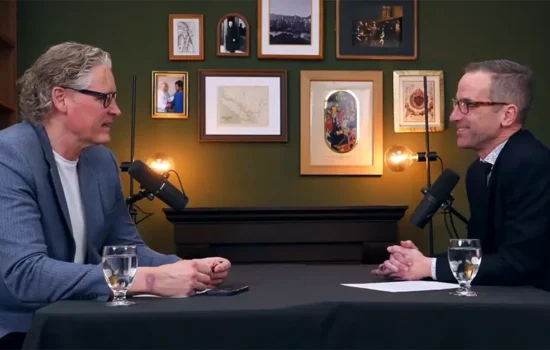
In this episode of Catholic Education Matters, Troy Van Vliet sits down with Daryl Weaver, President of Vancouver College, to discuss his journey into Catholic education and his vision for forming young people academically, spiritually, and personally. Daryl shares how teaching science at a Catholic boarding school in Malawi transformed his career path, his experiences in public and independent education, and what ultimately brought him to Vancouver College. They explore the growing demand for Catholic education, the importance of a strong Catholic identity and moral foundation, the unique benefits of single-gender education, collaboration among Catholic schools, and the need for long-term financial planning and sustainable growth. Daryl also discusses Vancouver College’s major campus expansion, successful capital campaigns, future plans for its music program, and why families are increasingly seeking schools that prioritize character, faith, and helping students become better human beings.
If you are interested in our school, make sure to check out our website:
🌐 https://www.sjp2academy.com/
Follow us on social media:
📸 Instagram: https://www.instagram.com/sjp2academy/
📘 Facebook: https://www.facebook.com/sjp2academy
🐦 X (formerly Twitter): https://x.com/SJPIIAcademy
Chapters:
00:00 Intro
01:07 Meet Daryl Weaver & The Mission of Catholic Education
04:07 From Medical School Rejection to Teaching in Malawi
09:15 The Growing Hunger for Faith Among Young People
12:51 Why Strong Leadership Shapes Catholic School Culture
15:59 Daryl’s Journey to Vancouver College
17:30 The Growing Demand for Catholic Education
21:00 Single-Gender Education & Building Lifelong Brotherhood
25:57 The Power of Collaboration & the Edmund Rice Network
31:08 Building Financially Sustainable Catholic Schools
35:59 Vancouver College’s Capital Campaign & New Music Hall
38:25 Why Families Are Choosing Catholic Education
48:00 The Future of Catholic Education: Faith, Innovation & Growth
55:00 Tuition, Accessibility & Long-Term Planning
1:03:02 Making Catholic Education Accessible to More Families
1:07:32 Leading the Future of Catholic Education
1:16:17 Final Thoughts on Catholic Education
1:17:02 Outro
Transcript:
[00:00:01] Intro: Welcome to Catholic Education Matters, the podcast that celebrates the beauty of Catholic education, highlighting excellence in academics, athletics, and the transformative power of faith. Join us as we share the stories of those making a lasting impact on Catholic education. Let’s begin.
[00:00:26] Troy Van Vliet: Good day, everyone, and welcome to Catholic Education Matters. My name is Troy Van Vliet, I am excited today to have my friend, Darryl Weaver here to joining us. Welcome, Darryl.
[00:00:35] Daryl Weaver: Thank you, Troy.
[00:00:37] Troy Van Vliet: Known Darryl for a long time, all the way going back to grade eight. So we’re gonna have a lot of fun stuff to talk about here. But before we get into it, I am going to read out a bio, which is very extensive. So you have to bear with me here for a minute to get through this. But Darryl Weaver is a respected Catholic educator and school leader in Vancouver, British Columbia, whose vocation has been shaped by decades of service to students, families and the mission of Catholic education.
[00:01:07] He is the President of Vancouver College and is widely known for steady leadership grounded in faith formation and a deep commitment to the integral development of young people. His work reflects a conviction that Catholic schools are not simply academic institutions, but communities of discipleship where faith and reason are formed together and where young people learn to live with purpose, virtue and courage. Before serving as President, Darryl served as principal at Vancouver College, bringing a frontline understanding of the day to day life of Catholic school and the practical realities guiding a community through growth, challenge and renewal. His leadership experiences give him a unique perspective on what families are seeking today. How students needs are changing and what must remain constant in a Catholic school.
[00:02:08] A clear Catholic identity, strong formation and an unwavering commitment to truth. Darryl’s own formation includes his time at St. Thomas More Collegiate where we met and, or an experience that continues to inform his understanding of Catholic education as a lifelong foundation, not a short season. From classroom culture to school wide mission, he has consistently emphasized that Catholic education is at its best when it forms the whole person. The whole person, mind, body and spirit.
[00:02:45] In an era marked by distraction, confusion and competing narratives about the human person, Daryl’s voice is both timely and trusted, offering a hopeful vision of Catholic education that is rigorous, joyful and anchored in Christ. There you go, Darryl. That was a mouthful. That was impressive. Thank you.
[00:03:06] Hopefully that wasn’t AI generated or something. Well, not by me anyway. Thank you. Thanks again for coming, Daryl. And thank you for what you do in Catholic education because you’ve been in it for quite a while now.
[00:03:20] Well, I know how long it’s been since I’ve been in high school. So we graduated together.
[00:03:24] Daryl Weaver: All the same.
[00:03:25] Troy Van Vliet: Yes. From St. Thomas More in Burnaby, way back in the day. We won’t say what year people can dig to find that out, but
[00:03:33] Daryl Weaver: look at the pictures on the wall.
[00:03:34] Troy Van Vliet: Yes. And you were always an academic. Well, at least in the time that I knew you in high school, you were the smart guy, the smart kid in the class, excelled in sciences in school, and we all thought Darryl was going to be a physician or something like that. Tell us a little bit about your background. What happened after school?
[00:03:55] Daryl Weaver: Sure, sure. And I think calling me
[00:03:57] Troy Van Vliet: an After high school.
[00:03:58] Daryl Weaver: After high school. Calling me an academic is just a polite way of saying that I wasn’t really a great athlete like yourself. So, no. Yeah. Was a bit of a journey.
[00:04:07] I always loved science in high school for sure. Inspired by some of the teachers there that were excellent in that area. And, I was convinced that I was gonna go down the medical route and seemed to be going in that direction at UBC, did well at UBC, did well in medical school application process, but didn’t ultimately get
[00:04:32] Troy Van Vliet: in. Oh, you’re such a failure.
[00:04:34] Daryl Weaver: I know. So I was just frustrated. It was the first time experiencing failure, which is very important for all young people to do. And I reacted by saying, well, I really wanna do something. And brought up in my faith, we’d always been taught that the purpose of being on this planet is to make a difference in the world.
[00:04:54] So I’m gonna go off and save the world in some other way. So I literally went down to International House at UBC and, and signed up with an international organization, the Canadian nongovernmental organization that was looking for science teachers. You didn’t have to have a science teaching degree yet. You could just have a science degree, bachelor degree. And, they took me and, and trained me very briefly in Ottawa for about a week and then and then dropped dropped me in in Malawi in East Africa, one of the poorest countries in the world.
[00:05:24] Wow. And and and by coincidence, I was placed in a… In in an all girls Catholic boarding school out Mhmm. Intentionally out in the bush to keep… To to to to the integrity of the girls in in in those times.
[00:05:42] And and that was such an impactful experience for me. That’s… You know, before that, I I would never have thought I would go into education Mhmm. Into teaching. But having 50 or 60 girls in my science classes all hanging off the edge of their seats, trying to to get as much out of…
[00:06:00] Learning out of me as possible, knowing that their their their existence and their extended family’s continued existence depended upon them graduating from high school and being able to get the means to go ahead, was so, inspirational and impactful as a teacher. Wow.
[00:06:17] Troy Van Vliet: So that kind of launched you Yeah. So that started the journey and then it came back here, worked in
[00:06:23] Daryl Weaver: the public district for a few years, found that frustrating, at the time, this is late nineties public district, so there was not a lot of, hiring. I was by far the youngest educator around. There was not a lot of innovation. And there also was, as we’ve talked about before, there also was a very deliberate focus in the educational system there to not talk about values. It was very clearly laid out in our education program.
[00:06:55] It was talked about in the schools all the time. It was emphasized by the union that as a teacher, you are not there to impose your values on on the students. So to stay away from that, to simply focus on academics and the curriculum, do not worry about the other aspects of humanity. The whole person.
[00:07:16] Troy Van Vliet: Yes. Humanity that you see
[00:07:17] Daryl Weaver: in your kids every day. Right? Yeah. I mean, yeah, be compassionate for sure, but don’t… But be very cautious about making any kind of
[00:07:25] Troy Van Vliet: Well, isn’t compassion a value? There you go.
[00:07:28] Daryl Weaver: There you go. But be very careful about talking about any important values that might be considered,
[00:07:39] Troy Van Vliet: whatever,
[00:07:41] Daryl Weaver: Western centric or or or particularly to your view. So you
[00:07:44] Troy Van Vliet: were supposed to have just to
[00:07:45] Daryl Weaver: be a complete open mind in terms of that. Wow. And, yeah, that was that was an interesting world. And and and frustrating, yes, to be to be trying to work as an educator in that world. Yeah.
[00:07:59] Education at its heart being so so relational and so human centric. Yeah. So
[00:08:05] Troy Van Vliet: we… And what do you know about that today in the public systems Yeah. Well,
[00:08:11] Daryl Weaver: it’s been a while since I’ve been in the public system, so I’m only an observer of it. But my understanding is that today, yeah, I’m not sure if that has
[00:08:26] Troy Van Vliet: Changed or worsened?
[00:08:27] Daryl Weaver: Changed or maybe that has reversed. There are certainly some values now, I think, that we hear about in the public system that are put forward as quite dogmatic,
[00:08:37] Troy Van Vliet: I would say.
[00:08:40] Daryl Weaver: And… So it’s interesting to see that transition. But what I would say in general in education is that, since that time, there has been a definite shift worldwide in all educational systems in which they’ve realized that, sure, schools are for the intellectual development. They have their academic, almost a given, taken for granted purpose. But it is so much more than that.
[00:09:05] And, and what we do and the impact we have as educators on on our students. It it… There’s all those other aspects of of that human being that you really need to to develop. And you you you see that talked about a lot in in the secular world in terms of social emotional values and training and development and support, which has, in particular, since the pandemic exploded. But obviously, in in in our world, in in Catholic world, the the idea of the importance of developing the spiritual side of those in our charge becomes really important.
[00:09:41] Troy Van Vliet: Well, and we know in the Catholic world, Catholic education, where our values come from. Like we know it’s clear, it’s identity, you know, we’ve identified that, we’re proud of it, we put it in the forefront. What’s confusing is that in the secular world, in the public school system, where are the values coming from? There are values. There’s obviously, there’s rules that we’re following and the rules are based on some form of values.
[00:10:07] Nobody can identify where they’re coming from anymore because you’re not allowed to talk about faith. You can’t. So where is there a moral compass and how can there even be one without a founding faith, whatever it is that you’ve got, how can there even be one?
[00:10:23] Daryl Weaver: Right. Well, yeah, I think what you’re talking about is that it’s in the public system is very relativistic, right? There’s foundation, right? So I mean, that’s the key and that’s what we’ve got to be grateful for is that we do believe that there is truth. There’s truth at the core and that’s what anchors us as well as thousands of years of history.
[00:10:43] So, again, something for us to be grateful for and I think something for us to share. I think what we’re seeing now more and more, we were laughing earlier this year about, I think there’s been stories in the media about how popular it is to be Catholic right now.
[00:11:01] Troy Van Vliet: Yeah, yeah, we’re the cool guys again. I
[00:11:04] Daryl Weaver: don’t know if
[00:11:05] Troy Van Vliet: we ever were the cool For the first time maybe. Yeah, we used to joke about how it
[00:11:09] Daryl Weaver: was the only prejudice that was condoned by the public.
[00:11:12] Troy Van Vliet: Yes, exactly.
[00:11:14] Daryl Weaver: Yeah. But now it’s sort of the cool thing. I think that’s just a reflection of people are looking and there’s a hunger. And I know we see it in our students that that they foundation, they want something to hold onto that is true and has integrity and has meaning, right?
[00:11:36] Troy Van Vliet: Yeah. When you’re saying you see it in your students, what’s the practical way that you’re seeing it in students? Is it just like interest on a day to day basis or questions that are being asked or?
[00:11:51] Daryl Weaver: Yeah, yeah. Well, I don’t know. Sometimes I think that, you you think back to our own high school years, thought we were… It seems in retrospect at least that we were a little bit more flippant and less serious about some things I think. I honestly, I’m really impressed by a lot of the young men in my situation at Vancouver College.
[00:12:13] The young guys that they really are thinking deep about things and they’re asking good questions. Just when you ask practical, I’ll have just touching moments where I’ll have a cool kid that will come up to me quietly and say, Mr. Weaver, could you unlock the chapel? I’d just like to go and say a prayer right now. I just need a moment of quiet.
[00:12:39] And I’m thinking, would I have said that to my principal when I was That’s pretty cool. Right?
[00:12:45] Troy Van Vliet: It is.
[00:12:45] Daryl Weaver: Yeah. And there’s just that more of that openness and curiosity on those things.
[00:12:51] Troy Van Vliet: And it comes from great leadership too though, when you have leaders that do that within the school, which is so important.
[00:12:57] Daryl Weaver: So important. Yes. Yeah. Well, and that… And that’s another educational precept, right?
[00:13:02] That whoever’s leading the school sets the tone. The principal has has the most impact on on the way the school goes
[00:13:10] Troy Van Vliet: for sure. Couldn’t agree more. You know, we had a great founding principal, Mr. Deloret, who taught you as well as me and St. Louis Moore.
[00:13:19] Then we managed to get him to help set up the school and he started a great culture right out of the gate. You know, this is what we’re going to be. This is what matters most. And that’s what the school is still carrying forward today. With Tony Walters as principal, so great leader and he’s been there as a teacher.
[00:13:40] I knew him
[00:13:41] Daryl Weaver: from elementary school. St. Michael’s boys together. Really? Okay.
[00:13:47] Troy Van Vliet: There you go. So yeah, he’s doing a great job. He’s been principal for a short period of time with us, but he’s doing a fantastic job and I’ve got all the confidence in the world in somebody like him as a spiritual leader in the school. So, just warm, welcoming, great leader, still stern, you know, knows what the rules are and wants to follow them. But it’s so encouraging to see somebody like that leading a school and it is so important.
[00:14:12] So from the top down and then of course all your teachers, you’ve to get buy in from them as well.
[00:14:17] Daryl Weaver: For sure.
[00:14:18] Troy Van Vliet: Yeah, for sure. So after you were in the public system, you went to…
[00:14:24] Daryl Weaver: Yeah. So I was in the public system and then getting a little restless. So looking for other opportunities, ended up getting a job at the Canadian International School in Hong Kong And thought, oh, this might be something to try for a couple of years, and it turned into six years. It turned into getting married and having two children born there. So…
[00:14:48] And it was an exciting time just after the handover from the British. So so, yeah, Hong Kong was… I I didn’t think of myself as much of a city guy before that, but it was a very… Also very outdoorsy city. We’re very green in in in some ways too.
[00:15:02] Right? And high energy, which I love. I’m a high energy person. And I love other cultures, so I learned a lot about about the Chinese
[00:15:10] Troy Van Vliet: culture. Yeah.
[00:15:11] Daryl Weaver: Yeah. Yeah. So that was fantastic. And and then when our kids were born and walking the streets of Hong Kong, despite the greenness out in the countryside, a lot of pollution in the city, so I can remember picking soot off my son’s face in the stroller and thinking,
[00:15:24] Troy Van Vliet: I think the
[00:15:24] Daryl Weaver: air in Canada is a little bit cleaner. So, we came back and, initially spent a couple of years in, Toronto at an all girls school there, just because there weren’t opportunities in BC at the time.
[00:15:39] Troy Van Vliet: Was that a Catholic school?
[00:15:40] Daryl Weaver: That was not, that was not, no. And then transferred out to White Rock and worked at a good independent school there for a decade. And and and then we had… It was around the… It was the hundred year anniversary of all the independent schools.
[00:15:59] So unlike what we do most years, all the all the independent schools, Catholic, faith based, independent, all got together at the Convention Center that year. So I had the opportunity to hear an inspirational Catholic leader by the name of Johnny Bivakwa. I said, wow, I wanna work with that guy. Was talking about… Actually, was talking about his father and his faith journey.
[00:16:26] It was just so… It was so inspirational. It made me think, well, be able to work with someone who believes that deeply would be an awesome opportunity. So an opportunity opened up at Vancouver College. He was the principal at the time, and they were looking for someone to run the senior school, and I was doing something similar out in White Rock.
[00:16:47] So Mhmm. I was able to make that switch. And and… Yeah. And the rest is is history at VC.
[00:16:53] So then I moved up through through Vancouver College, running the senior school, K-twelve principal for five years after that, and then now as a… And now president.
[00:17:05] Troy Van Vliet: Wow. They couldn’t have found a better guy. Yeah. That’s awesome. And the school’s thriving.
[00:17:10] It’s packed.
[00:17:10] Daryl Weaver: Yeah, yeah. It’s doing well, but I mean, that’s not anything to ever rest on our laurels. I think we always have to be aware of how we can be better. There’s dangers if things are too easy. Fact, yeah, you get complacent.
[00:17:30] So we definitely have to always move forward. But one of our challenges we talk about is the fact that we are thriving. We have so many applicants through our admissions process. We know we are always turning away a lot of good Catholic families who would thrive and who would benefit from a Vancouver College education. So one thing we need to think about as a school, and I’m fortunate to be in this role to be able to do that, is should we be expanding?
[00:17:56] Should we be finding ways to serve more of the population here? Yeah. Because there is that hunger.
[00:18:04] Troy Van Vliet: There is. So Vancouver College, well, it’s celebrated a hundred years, not that long ago. And, it’s funny that that kind of woke me up in the middle of our design process for St. John Paul, because we, you know, when you’re designing a school, you start thinking what your needs are today somewhat. And then it was like, well, wait a minute, you know what?
[00:18:30] We got to look a 100 out here. Area is where we’re building the school is going to be completely densified. There’s going to be so many homes around here. And we were originally designing to build for like 600 students and we’ve went back to the drawing board and we redesigned it with underground parking and everything so we could fit 900 students in there now. So, I mean, that’s not a massive difference, but at least it was one of those things.
[00:18:55] It’s like, okay, we got to start thinking bigger and longer term. The one hundred year anniversary of Vancouver College was a bit of a wake up call for us. I’m glad
[00:19:03] Daryl Weaver: that inspired you because having been to your place, I think that is, that it was wise that you did that. You have that potential to grow. We were joking recently about the fact that, in 1922, when the school was first built, all the pictures show that it was all surrounding farmland and we owned a significant amount of that land. Yeah. And then what invariably happened over the decades is that the brothers would sell off parcels of the land to be able to continue running the school and supporting its programs.
[00:19:30] And now we’re looking regretfully, thinking, oh, I’d like that some of that land back.
[00:19:37] Troy Van Vliet: Yeah. But you managed to… How big is the campus at, acreage wise? Do you know? No,
[00:19:43] Daryl Weaver: no, not acres off the top of my head, but we’re definitely maxed out in terms of how much we can build. We’re in the middle of a building campaign for our music building and we had to ask for permission to… Because that’s… We’re certainly in the in the overage area in terms of use of our our square footage. Yeah.
[00:20:01] Troy Van Vliet: How’s that looking then? Do you think you’ll get it?
[00:20:04] Daryl Weaver: Oh, we got it.
[00:20:05] Troy Van Vliet: Oh, you got it. Okay. With the city.
[00:20:07] Daryl Weaver: Okay. With the city. Okay. Good. Yes.
[00:20:09] That’s great.
[00:20:09] Troy Van Vliet: Well, schools are important. Even the city, even the secular city knows.
[00:20:13] Daryl Weaver: They do. They do. Yeah. The city has been good to work with. I think we’ve had long relationships with them over a hundred years.
[00:20:20] Troy Van Vliet: Yeah, that’s great. So, we went to St. Thomas More, it was an all boys school and we went there. And after, Marion High closed down for a number of different reasons, there was no girls school, in Burnaby, in the West Area. So then it was like, okay, so we ended up, they ended up deciding to blend it.
[00:20:46] So all boys versus co ed, you’ve experienced both in some ways as an educator, right? I have, for sure. So, what are the advantages of being a co ed versus all boys or all girls? What you, you’ve seen the differences?
[00:21:04] Daryl Weaver: Yes. Yeah. And the argument in favor of coed, which is what we see in in the public system and a lot of schools are are are strong in the sense that it is a mirror of society, which, of course, is what the school is supposed to be. Yep. But but having seen that in both at all girls schools and at all boys schools, it…
[00:21:22] What is really neat is is is seeing the opportunities for the boys or the girls, but particularly in my case now, the boys to to be able to occupy a whole range of different roles because of the fact that they’re not super worried about the girls being around.
[00:21:41] Troy Van Vliet: Right. Yeah.
[00:21:42] Daryl Weaver: And therefore having to occupy a certain niche you know Mhmm. Etcetera. Yeah. So I I I I think I think that the the single gender schools do offer something for boys to be able to develop, as we were talking about initially, the whole person without worrying about sticking within a limited stereotype of roles. So that’s certainly neat
[00:22:12] Troy Van Vliet: to Yeah, definitely pros and cons of both. Having gone to the boys school, all boys, I couldn’t see it any other way. Like it was fantastic when we were there.
[00:22:23] Daryl Weaver: Yeah. Yeah. And similar vibe at VC now. Think the boys really enjoy it. That’s another aspect that comes up out of it in the same way that you and I are still connected.
[00:22:32] They are connected for life. They just feel like it is a brotherhood. And again, that’s something beautiful to see. It’s something you need see replicated a lot.
[00:22:40] Troy Van Vliet: No, I know. To have friends from, high school still is pretty special. Yeah, that’s great. Strong programs at Vancouver College for sports as well. They were our rival when we were in high school and, but I let, you know what, when we started the whole idea of the new Catholic high school in South Surrey, I reached out to, you know, people I knew at Vancouver College.
[00:23:08] I reached out to people I knew at St. Thomas More and we toured the other CISVA Catholic schools in the Lower Mainland as well, just to get design ideas and Vancouver College for all that matters. And, you know, the feeling that we had that we’re all in the same team was absolutely, it’s what I hoped it would be like, but it was so satisfying, during that whole build process. Anytime I, you know, I would call Steve, Steve, you know, we need help with this, you know, can you get anything I can do? We need to send stuff over right away, you know.
[00:23:46] Speaking with, joining Vliet, Vliet. Yeah, great, great help too. Everybody just opened opened up for us and just said, Hey, what can we do to help? You know, we’re all on the same team. We’re all building the same thing here.
[00:23:59] Even though we had sports rivalries, things like that, that was always going on. It was really overwhelming and that’s really how it should be.
[00:24:08] Daryl Weaver: Oh, a 100%. And that’s, yeah, we certainly continue that legacy. I don’t think there’s any other way and that’s… We always have to support each other in those things. Yes, obviously in the heat of the moment of athletic competition, it’s always…
[00:24:25] It it can be intense. Yeah. But I love I love to see… You see it in the boys right afterwards too. Right?
[00:24:32] Right? They’ll be shaking hands and hugging it out. Yeah. You know, putting things in perspective. That that is really just athletic competition.
[00:24:39] Troy Van Vliet: Yeah.
[00:24:40] Daryl Weaver: But sharing and becoming better because of each other, that’s really the way forward in education. Yeah,
[00:24:48] Troy Van Vliet: absolutely. Sharing all the different, yeah, even governance structures. Like, I mean, there is no manual on how to build a Catholic high school. Like you don’t just say, well, here it is, this is the guideline, this is how you do it and away you go. Like we had to, I don’t want say reinvent the wheel, but we were taking stuff from all these different, you know, schools, that we had dealt with in the past or worked with or had relationships with in the past in one way, shape or form.
[00:25:15] And, yeah, it was great. It was very, it was really heartwarming.
[00:25:18] Daryl Weaver: Yes. Well, thinking back, you’re reminded me too, even when I made the shift to Vancouver College, was one of the things that gave me hesitation is that we are in many ways isolated. There are not a lot of us, right? There are very few. The CISPA schools, there’s six or seven high schools there.
[00:25:38] In in the independent Catholic network, there’s even fewer.
[00:25:43] Troy Van Vliet: So… There’s even fewer. Yeah.
[00:25:44] Daryl Weaver: Yeah. So you are… It’s exciting in the sense that you you can be nimble and you can, you know, create your own wheel and figure out something, some new way of doing things, but
[00:25:55] Troy Van Vliet: it
[00:25:57] Daryl Weaver: also can be limiting. So I think there is strength in collaboration and that’s why one thing… Well, we should certainly do more of it within the Lower Mainland. But Yeah. I am thankful that that Vancouver College does have a global network, which back when we…
[00:26:12] Back in the day, I didn’t realize when we were at STM,
[00:26:15] Troy Van Vliet: but
[00:26:15] Daryl Weaver: the Edmund Rice group of schools, 150 plus around the world.
[00:26:20] Troy Van Vliet: Wow. I didn’t know that.
[00:26:21] Daryl Weaver: 400,000 students.
[00:26:22] Troy Van Vliet: I had no idea.
[00:26:23] Daryl Weaver: Yeah. And and again… If you if you would
[00:26:27] Troy Van Vliet: have told me there was two, I would have said, oh, yeah.
[00:26:29] Daryl Weaver: Yeah. There’s only two in Canada, Vancouver College and STM, but… Wow.
[00:26:33] Troy Van Vliet: I didn’t know.
[00:26:33] Daryl Weaver: Yeah. And that network, and we are just starting to to mine that, right? Yeah. Plug into the richness of that Yeah. Us and STM.
[00:26:40] Yeah. But there there is so much there there’s so much collective knowledge out there and all speaking the same language, all coming from a common set of values, not just Catholic values, but Edmund Rice values. It’s very powerful. And it’s also a pretty neat connection when you talk about service and and our need to do that as as as Catholics. Mhmm.
[00:27:06] So many of the schools are connected to the global South. So, there’s there’s opportunities for us to to have our students and our staff connect with with schools that are of less means than than what we have here in the developed world. Mhmm. And learn so much from the people there and and and why they are so happy in their worlds. Right?
[00:27:27] Mhmm.
[00:27:28] Troy Van Vliet: What… Are there Edmund Rice schools in The US?
[00:27:31] Daryl Weaver: There are. There’s… I believe there’s 16 schools. So those are the ones those are the ones that we are most connected to
[00:27:36] Troy Van Vliet: Yeah.
[00:27:37] Daryl Weaver: In part of the Edmund Rice North America network. Yep. Most of them are in the Eastern Seaboard. There’s a couple down in… There’s one down in California.
[00:27:46] There’s one in Hawaii, actually. Yeah. So we do meet with them twice a year. Oh, great.
[00:27:52] Troy Van Vliet: Well, that’s good. So we are all, there’s 50, I think roughly, 50 or 51 or 40, somewhere around that Catholic schools in the Lower Mainland. And the largest CISVA, the Catholic Independent Schools of the Vancouver Archdiocese, is, the largest, from what I understand, is the largest school board outside the public school board as a full entity. It’s been very beneficial for us setting up a new school to have that entity, to have CISA there at our fingertips, to be able to draw upon the credibility, in order get a new school set up, because you’ve to go through the ministry and everything like that as well. We follow the BC curriculum.
[00:28:43] So it’s actually been really helpful for us to be a part of that because we’re not an Ameren Wright school. We’re not even technically a CISVA school. We’re a CISVA affiliate school. As
[00:28:55] Daryl Weaver: are we.
[00:28:55] Troy Van Vliet: Yeah, as are you. And it is great to be a part of that big structure. It is great to also have some autonomy. I think there’s some things that can be adjusted within CISVA. It’s this great entity, but I think there’s some things that we need to make changes on to get it, to bring it to the next, for the next hundred years.
[00:29:21] But that’s all in due time. So, and we’re kind of trying some of these new things that we believe in. And I think that the schools need to be able to stand on their own more financially, which is a lot of CISVA schools need to be rebuilt. So, and there’s not a lot of money to do that with. And to me, that’s kind of some poor fiscal planning, I guess, you know, cause we end up either having to sell some land off to pay for things.
[00:29:52] So we just talked about that. Or like we don’t have any land to sell off where we are. So that’s it. We’ve maximized the use of that property. So we already have to start thinking about, okay, what does this look like, thirty, forty, fifty years from now where we either need to rebuild or or do major upgrades or renovations or what have you, we want to be able to afford to do it then rather than have to go back to the Catholic community and try fundraising and things like that in order to get it, you know, so that it’s feasible.
[00:30:27] So our schools, they don’t need to be a profit center, but they do need to be able to sock money away to prepare for, like nobody wants to do a fundraiser to cut the grass. Like that’s just not, or pave the parking lot. That’s just like, maintenance. Okay. We should be able to afford to do that.
[00:30:47] You know, when we’re doing a fundraiser or a capital campaign, it’s to add a new building or to, outfit the gym, you know, redo it or something like that where people see this, it’s exciting new upgrade. Okay, great. Let’s go and raise some money for it. It’s like, well, we need a new roof. It’s like, Who gets excited about that?
[00:31:08] Right?
[00:31:09] Daryl Weaver: Yeah. And we’ve been fortunate at VC to have good fiscal management to take care of those major maintenance items on a cyclical basis. Yeah. We do that, but we are we are having similar conversations about what does the the future look like thirty or forty or fifty years down the road and how can we
[00:31:26] Troy Van Vliet: Yeah.
[00:31:26] Daryl Weaver: Pivot from… I think I think even Vancouver College has been a school that has kinda gotten by in the sense that it’s run well fiscally. And when we’ve had building campaigns, they’ve gone fortunately because of the generosity of our families, it’s gone well. But it hasn’t been in a very planned, logical manner. So a lot of the discussions we’re now having board at level is around how do we do what other more established school systems do, have an endowment fund, have some kind of financial structure in place that’s going to ensure that you’re not just reacting to the moment or having to worry about a litigation that might rear its head or anything like that.
[00:32:21] Troy Van Vliet: An endowment is one of those things that the best time to start an endowment would have been fifty years ago. Second best time is today. Exactly,
[00:32:29] Daryl Weaver: for the next fifty years.
[00:32:30] Troy Van Vliet: Exactly, for the next fifty years. It’s tough to sock money. We’ve started one already thinking like, okay, can’t afford to do this. But even if we start the habit of putting just a little bit of our fundraising money, where you take that and that gets socked away and that will eventually start to grow and start to grow even if it’s a small percentage, it’ll grow over time and that’s encouraging. And when it comes to donors, some donors like to know that when they give money, it’s going to be there forever and that it’ll continue to build forever and it’ll help other families down the road forever.
[00:33:07] Daryl Weaver: Yeah, it makes me think we were talking about this at the school today too, right? Another area that we’ve often… Most of our donors have been current parents dreaming about the facilities that we’re going to build for their sons in the immediate future. One area that we haven’t gone into is planned giving, because we also think about, there are some donors that are talking about their wills and talking about, you know, at the end of their lives, they’d like to make a donation to a strong Catholic school. So that hasn’t been something that we’ve had the…
[00:33:37] Well, we haven’t really even had the time or the people to devote to that, but that’s another area that we could get into that could support that.
[00:33:46] Troy Van Vliet: So when you had… Speaking of campaigns, you had a very successful capital campaign because your school’s just recently rebuilt, basically.
[00:33:53] Daryl Weaver: Right.
[00:33:53] Troy Van Vliet: Yeah. So tell us a little bit about that. Why was there so much success?
[00:33:59] Daryl Weaver: Well, think in some ways it comes down to the people and both the people that were running the campaign were fantastic. And then of course the people in the community and how they responded, right? So it was pretty neat around, fifteen years ago. They realized there was an imperative to to rebuild the old 1924 building because of, for seismic reasons. But the the…
[00:34:23] You know, much like you were at JP two, the the leadership at the time said, well, let’s not think small. Let’s think a little bit bigger instead of just, you know, size… Seismically repairing this building. Maybe we should be completely redoing the entire campus. Yeah.
[00:34:37] And and the board supported that, the board was visionary, and they got the right people in place, fantastic director of advancement in Roneth Cogswell. Roneth.
[00:34:49] Troy Van Vliet: She was a great help for us as well.
[00:34:50] Daryl Weaver: Yeah, that’s a good sharing there too. Yeah, so she was fantastic in really getting things going with school leaders at the time. And then the community responded right away and said, well, yes, we bleed purple and gold, we love Vancouver College, we want to support it, see the need for and the possibilities for innovation and change. Yeah, and then I can… So I can remember that that was one of my first memories VC.
[00:35:18] We had the official launch of the Our Next Century campaign in 2016. And then amazingly, by 2018, we were already opening Manuel Hall, which is our middle school, all grades seven, eight, nine. It’s a beautiful new building there. Transformational for the boys to have enough room in the in the corridor to not bang into each other all the time. Disciplinary issues went way down.
[00:35:40] And then only two years later, mean, it’s 2020, so it was the pandemic. But to have, his grace, archbishop Miller be able to open our Lannon Hall,
[00:35:49] Troy Van Vliet: our
[00:35:49] Daryl Weaver: elementary school and our admin area and our courtyard reopening again. So we were lucky, we were lucky.
[00:35:58] Troy Van Vliet: That’s huge.
[00:35:59] Daryl Weaver: Yeah. And only now we’re on the final portion of it. We call it the encore campaign because… Nice. It’s for…
[00:36:07] Troy Van Vliet: I see what you did there. Yeah. Well, that’s again, Runeeth,
[00:36:09] Daryl Weaver: right? Yeah.
[00:36:11] Troy Van Vliet: Encore. So was that part part always planned? Was it always…
[00:36:15] Daryl Weaver: It had been planned, but it had been intentionally shelved, music. It’s saying, well, you don’t really quite have the funds to also complete that. So the music rooms are in literally nineteen sixty five classrooms hanging off the side of the alumni gym.
[00:36:29] Troy Van Vliet: Oh,
[00:36:29] Daryl Weaver: yeah. They’re definitely not the best And miraculously, the VC music program has been very successful. Yeah.
[00:36:39] Troy Van Vliet: In that way, it’s not about the building.
[00:36:40] Daryl Weaver: It’s not about the building, but, yeah. So we’re just imagining what the future can look like. So now we are building, we’re gonna actually, put shovels in the ground next month for, yeah, for our new building,
[00:36:52] Troy Van Vliet: Is Sandal Green it gonna be bigger than what’s currently there?
[00:36:55] Daryl Weaver: Externally bigger. Yes. Yeah. And and also again, by the generosity of the community. So it’s it’s it’s gonna be called the Meehan Music Hall.
[00:37:05] The Meehan’s are prominent Vancouver College Yeah. Family for many years. Peter as leader of Saint Mark’s College before doctor Kurt Turcotte, Peter Meehan was on our board. And and now Paul Meehan is is the donor and his family that allow us to get started there.
[00:37:25] Troy Van Vliet: That’s awesome. Love to hear that success and the growth of Vancouver College and the demand of kids trying to get in there. Can I ask what your, roughly in grade eight, you’ve got about 100 or 125? How many kids do you have in grade
[00:37:41] Daryl Weaver: eight? In grade eight, have 168.
[00:37:43] Troy Van Vliet: 168, okay.
[00:37:44] Daryl Weaver: But we already have 60 incumbents or 60 that are coming up from the grade seven.
[00:37:48] Troy Van Vliet: From the grade seven.
[00:37:48] Daryl Weaver: So we admit about 100
[00:37:49] Troy Van Vliet: and About 100.
[00:37:50] Daryl Weaver: Yeah.
[00:37:51] Troy Van Vliet: Wow. And how many applications would you typically get for 100 spots?
[00:37:57] Daryl Weaver: For 100 spots? Probably 300 plus.
[00:38:01] Troy Van Vliet: Nice.
[00:38:01] Daryl Weaver: Yeah. It can be 400. We look at so we take in grade mainly. We take in 30 boys at grade seven, and we take in a kindergarten, obviously, 26 boys. Mhmm.
[00:38:14] And so altogether… And and we’ve been breaking records the last three years in a row now. I think altogether we will be seven fifty or 800 applications altogether for those very limited number of spots.
[00:38:25] Troy Van Vliet: Wow. Yeah. That is awesome to hear.
[00:38:28] Daryl Weaver: The need is out there. The hunger is there for sure.
[00:38:30] Troy Van Vliet: I was just talking with Father Augustine today from Star of the Sea Parish
[00:38:34] Daryl Weaver: and
[00:38:36] Troy Van Vliet: Star of the Sea Elementary, is dual stream all the way through. So there’s 60 kids per grade.
[00:38:43] Daryl Weaver: That’s cool.
[00:38:44] Troy Van Vliet: This year there was, for kindergarten, I think there was 31 spots because the rest were taken up by siblings coming in 31 spots available. There was like 140 families applying for the 30 spots of which I think father had said between thirty and forty families, Catholic families are getting turned away because that’s how many the demand is. Yeah. And it’s a great thing. It’s very sad when Catholic families want to get Catholic education for their kids and they can’t get in, you know, which is tough.
[00:39:25] So there’s, you know, hopefully they’ll get rerouted to Cloverdale Catholic or to St. Catharines or whatever.
[00:39:30] Daryl Weaver: So hopefully they can manage that. What we do see is, and thinking about it, the stories we hear about why, why are the numbers increasing? When the families come in, they say, we are looking for that solid foundation. Are we are looking for… You know, we see that your vision at Vancouver College is that every boy leaves here as a better man.
[00:39:52] Yeah. Right? So that’s what we want our son to be like. That’s, again, so inspirational to be in a community. I speak about the whole Catholic community that values that.
[00:40:04] So again, having worked in the secular school system, that’s my big comparison there is anytime there was a disciplinary issue in some of those certain private schools, they would… The parents would come in, you’d ask the parents to come in and they’d bring their lawyer. Yeah. Right? Because they’d be trying to defend their boy from any possible disciplinary consequences of what he’d done wrong.
[00:40:29] Right? Whereas I can remember my first meeting at Vancouver College with parents and boy being, you know, in trouble for some issue and the parents coming in and saying, listen, do what you need to do.
[00:40:40] Troy Van Vliet: Do what you need to do. Yeah.
[00:40:42] Daryl Weaver: But basically, the fact that the parents are are so aligned. That’s what makes our schools work too. Right? The parents are so aligned. Yep.
[00:40:48] They’re not interested in getting their son into your school so they’ll become winners in the world and get into Harvard, etcetera, and make a million dollars. What they care about is that their sons come into our school and come out of it as better human beings. Yeah. So they know that’s going to be a journey and sometimes there’ll need to be some course corrections, but they’re partnering with us to make that work. And that’s game changing in education for me.
[00:41:12] Troy Van Vliet: It is. Yeah, that’s huge. Glad we’re aligned in that way. Catholics and non Catholics. You have some non Catholics in Can Vancouver you share that in terms of percentage wise, roughly?
[00:41:25] Sure. Yeah. So we’re fairly
[00:41:28] Daryl Weaver: similar to most CISMA schools in that we are about 20% non Catholic, I would It’s an interesting tension too. Right? Because it was what we find… Again, I would say even with the non Catholics that that have ended up being admitted to our schools, they’ve brought a lot and they come from a strong value based, and that’s what they’re looking for. They’re frustrated with, in many cases, the fact that they don’t have their own faith based schools
[00:42:00] Troy Van Vliet: Yeah.
[00:42:00] Daryl Weaver: To go to. And one of the other things that we talk about at VC is is diversity is our strength. So we do see we do see the other faith traditions enriching ours too. And one one of our favorite stories is we have very few Muslim students, but a a couple of them a few years ago said to said to… Came to me and said, oh, we’d like to we’d like to do our daily prayer.
[00:42:29] We have to pray five times a day. So Mhmm. Could could we have a space? And I was thinking, well, I’m sure we could find you a space to do that quietly at lunch, at least. And they actually, on their own initiative, approached our last teaching Christian brother and asked if they could use his room because they found it was a particularly sacred feeling.
[00:42:47] And they started using it. No big announcements were made or anything like that, but boys noticed, right? The Catholic boys started talking about, What’s so and so doing in the room there? They’re praying so frequently. And that became an inspiration for our boys to do a little bit of soul searching themselves.
[00:43:09] Where does prayer belong in their lives? There are benefits to having other faith traditions on
[00:43:17] Troy Van Vliet: the campus Yeah, for see that too. Have a lot right now that are applying, non Catholics that are applying and a lot of them saying too the same things as like, wow, the public system, we’re not seeing what we want to see there. So, and, there’s a lot of families are like a generation removed from a faith. So whether it’s Catholicism or, you know, they’re saying, well, I grew up Catholic, but then, you know, we fell away and now my kids go to high school and we just kind of really want to bring that back. It’s like, okay, cause they’re just sort of seeing, like, you know, Western culture was built on Judeo Christian values.
[00:43:54] Like it was, that’s just a fact. The West was built on that. And, we’ve coasted on that for a long time and as the christian world’s fallen apart, it’s massive reduction in christianity in terms of in the West. Some of that’s due to, different faiths migrating to the West or, just secularism just taking over and…
[00:44:25] Daryl Weaver: Yeah, I really feel it’s much more of the latter.
[00:44:28] Troy Van Vliet: Yeah, yeah, yeah. And and you can ride on the coattails of Christianity for a while until you start forgetting where your moral compasses come from and you start, why are we doing it this way? You know, and Christianity always has its ability to turn back. It’s like, well, this is what our faith is. This is what we believe.
[00:44:53] But when you remove that faith, that moral compass, now you’re questioning everything and all of a sudden we live in this world of relativism that we were just talking about where anything goes. If it feels good and it’s your truth, that means it’s okay. We’re ending up
[00:45:17] Daryl Weaver: in this… The individual, the community. Exactly.
[00:45:23] Troy Van Vliet: And if it, yeah, if it feels good to me, you know, and people don’t understand how destructive that can be and we’ve got this, we’re living in this bizarro world all of a sudden where, where anything goes, you know, and hence we’ve got this, this non Catholic group that is now saying, ‘Hey, can we come into your school?’ Which is great, you know, because we want that, we’re welcoming that, but I just find it fascinating the overwhelming numbers of non Catholics want to come to the school, which is kind of this whole revival, this new renaissance for Catholicism.
[00:46:05] Daryl Weaver: Yeah, I think again, it’s hopeful, right? It’s people of hope, right? It’s inspirational that there’s possibilities there for the Church to really be the moral beacon. I mean, I don’t think a better example right now would be the Pope himself, right? And how he’s standing up quite strongly amidst all the chaos that’s going on in the world and delivering the right messages and reminding us of our values that we need to stand with the marginalized.
[00:46:38] We need to support the migrants.
[00:46:41] Troy Van Vliet: That’s
[00:46:41] Daryl Weaver: right. That kind of strength is exactly what the world needs and wants
[00:46:46] Troy Van Vliet: right now.
[00:46:47] Daryl Weaver: So there’s a big opportunity, I think, to open the tent to the world for the Catholic.
[00:46:54] Troy Van Vliet: What does that… We’re going to open up a can of worms here in this conversation. Standing with the marginalized. Yeah. Opening arms to the migrants.
[00:47:04] There’s a ditch on both sides of the road with that. What I mean by that specifically is, it’s easy to, when you’re standing with the marginalized or standing up for the marginalized, it’s quite easy to end up falling in that trap of anything goes because there’s, you know, I can support you as a Christian, as a Catholic, I love you no matter what, right? I see Jesus Christ in you, I love you.
[00:47:40] Daryl Weaver: Exactly, inherent human dignity.
[00:47:41] Troy Van Vliet: Exactly. That doesn’t mean I love everything that you
[00:47:47] Daryl Weaver: do. Right.
[00:47:49] Troy Van Vliet: Or doesn’t mean I love everything that you stand for. Doesn’t mean I agree with everything.
[00:47:54] Daryl Weaver: Right.
[00:47:55] Troy Van Vliet: And that’s where that line can all of a sudden be get very gray and you could be called, just say, whatever, a racist or a, you know, a bigot and the whole, the typical, the typical thing, the typical, names that people can get called just because they say, well, I don’t agree with this. And it’s like, oh, you are this or you are that. And all of sudden you got these labels flying around all over the place. What do you think about that? What are your thoughts on that?
[00:48:26] Daryl Weaver: Yeah. Lots of thoughts. I think, first of all, keep the line clear. You demarcated it quite well there, right? So, yeah, when you think about standing with the marginalized, even within our own school system, there are kids, for example, struggling with their sexuality.
[00:48:45] What do we do? We don’t say, Oh, that’s against Catholic faith. We’re not going to talk to you. You’re on the outside. You’re allowed to be part of our community.
[00:48:55] We embrace them, we bring them in, we show them love. I think is the way forward, to have that human focus.
[00:49:06] Troy Van Vliet: Right? And
[00:49:10] Daryl Weaver: to be honest, I’ve never found… As long as you’re keeping you’re seeing, like you said beautifully, you’re seeing Christ in each of those humans, then it doesn’t become problematic. It doesn’t become something where there’s tension and name calling. You’re being compassionate. I think about the work of Father Brian Duggan, who’s advised us and has done a lovely job with James Burkowski as well, around engaging with alternate members of the community.
[00:49:44] As long as you have that human openness and that compassion, then it doesn’t devolve into name calling and negativity. And it’s not that you’re giving up your values. It’s not that you’re saying that, yeah, everything they do is fine and if it feels good, do it or anything like that. We all know the long term consequences of that approach. But really meeting them where they are, being compassionate, being open to them and being connected with them and keeping them in community is the way forward.
[00:50:18] Troy Van Vliet: It’s a tough thing for people to get their heads wrapped around. For sure. Both sides.
[00:50:21] Daryl Weaver: And I think it gets tricky when it becomes too dogmatic instead of two people are Christ focused, right? And you just need to look at Jesus, right? He had the same condemnation.
[00:50:35] Troy Van Vliet: What are you doing hanging out with
[00:50:36] Daryl Weaver: those tax collectors and prostitutes? Right? I think it’s the same message for us today, right? That we need to connect with.
[00:50:44] Troy Van Vliet: Exactly. And I know, I think Pope Francis was misinterpreted when it came to some of those communications that he was floating out there as well. And, it’s like, well, wait, we can love the sinner. We can hate the sin. We don’t have to, it’s not one package.
[00:51:00] Not. It’s not one package of love or one package of hate. Right. Know, we can distinguish between the two.
[00:51:07] Daryl Weaver: To disagree with an approach or a policy or something like that is different from hating or loving the person. Yeah.
[00:51:16] Troy Van Vliet: Yeah. So we as Catholics, Indian Catholic schools, Catholic church or whatever, we’re also targets for, you know, we could be put in situations that are against maybe what we believe in and label can come out with it right away or we can be tested in that way. So some of that was one of the things that we have to be careful of going forward, think, and that starts with welcoming everybody, but we can’t just say there’s no rules either.
[00:51:55] Daryl Weaver: Oh no, no. And again, as we’ve been talking about throughout this, that’s our strength, that we have that strong foundation. Right? So I don’t think we need to feel threatened that we’re going to let go of that. Despite as we’ve also talked about the secularization of the world, I think that, we’ve realized as a world that that doesn’t work and we’re moving towards a resurgence in faith.
[00:52:19] And we can hold on to that and then just, yeah, continue to have that openness to all.
[00:52:24] Troy Van Vliet: Yeah. That’s awesome.
[00:52:26] Daryl Weaver: Yeah. I’m hopeful.
[00:52:27] Troy Van Vliet: Yeah, yes. So am I, so am I. And as we, especially as, SGB2 grows, next year is going to be a big growth year, you know, with the new intakes of grade eights, of course, that’s the biggest growth in the school is always at the lower grades. And there’s going to be, you know, kids coming in from all over. Vancouver College has got this great benefit of having the elementary school, attached to it.
[00:52:53] And how many kids in the 30, no.
[00:52:56] Daryl Weaver: There’s 200 kids in the whole elementary, but there was, yeah, it’s just one class of 30 essentially.
[00:53:00] Troy Van Vliet: One class of 30.
[00:53:01] Daryl Weaver: Okay.
[00:53:02] Troy Van Vliet: So that culture starts early.
[00:53:04] Daryl Weaver: It does.
[00:53:05] Troy Van Vliet: Yeah. And you hope now it gets diluted when somewhat in grade eight, when there’s a lot, there’s a big intake of new kids at grade And it’s the same thing with our school growing so fast. It’s going be like, Oh, how do we keep that culture? It’s going be a big challenge.
[00:53:20] Daryl Weaver: I would say that that’s another key factor to always consider in a school. Again, talking about never get complacent. Right? Hold on to that culture. Yeah.
[00:53:31] That is definitely what makes a school work. So there’s being too big for sure or Yeah. You know, or or or losing… Letting key aspects of your culture slip away. It’s so important to hold onto that.
[00:53:48] Troy Van Vliet: I’m going to go full circle. I want to go back to tuition fees and the finances. Yeah. Sorry to change gears on you here again, but this is something I didn’t want to forget, talk about more. There’s a big difference that we found when I was doing the researching of different schools, not just within the Catholic community, but, in the secular private schools and also the faith based private schools.
[00:54:13] And, what I’ve found out was that by far the Catholic schools were, had by far the lowest tuition out of all the schools, which is something to be proud of in some ways. In ways. In other ways it’s like, I think we’re missing something here because I’ve seen, especially in the South Surrey White Rock area, the Archdiocese is very good at planning ahead in terms of acquiring land in areas where they can see a future. There’s going to be future development over there. One day it might be fifty, one hundred years out.
[00:54:51] You know, they don’t think in five, ten year increments, they think in hundreds of years of increments and so they’ve been really good and the Vancouver Archdiocese is no exception in terms of, being able to speculate in that and they do it much better than the city of Surrey does, must say. Well, I should probably say that about all municipalities because, nobody ever thinks it’s a great time to think about fifty years from now. Exactly and then all of a sudden you’ve got this whole land development going on in an area and it’s like, oh gee, you know, we’re going to need a school there and now they’re paying top dollar to buy land, to put a school on in the middle of this new developed. So anyway, getting back to it, the church has been very great at planning that. So we’ll get the land for inexpensive and then all the parishes, usually the CISVA way of doing things is the parishes will pitch in and they’ll build a high school.
[00:55:48] So they’ll, each parish will build their own elementary school and then they’ll chip in and build a high school. And then, you know, you get a school like Holy Cross that was built forty years ago. How long has it been since we were in isolation? It’s coming up on forty years ago.
[00:56:03] Daryl Weaver: Yes.
[00:56:04] Troy Van Vliet: Actually, think it is a little more than forty years ago because when I was in grade eight, that’s when it opened.
[00:56:09] Daryl Weaver: I remember that.
[00:56:09] Troy Van Vliet: It could have gone there. So, great school packed as well. There’s over 800 students there, been operating for a long time. But it too needed seismic upgrades. The school basically needed to be rebuilt, but they found themselves with nowhere near the amount of money in the coffers that they would need to get it rebuilt.
[00:56:30] So then they’ve got to appeal to the surrounding parishes to all chip in and to get some money and project advance and everything. It’s wonderful to have all those things. Truly is. I think it’s great. But to me it means like there’s just poor fiscal planning, you know, I was talking with the principal from a very successful CISV elementary school my whole thing is, well, the tuitions are too low.
[00:57:01] They’re like, well, why are they too low? Make money every year. Like there’s money set aside every year. It’s like, okay, well, of all, you got the land for free from the parish. You got the building for free from the parish.
[00:57:12] The parish paid for everything and you think just because there’s a little bit of money left over at the end of the year after you pay for all the teachers’ salaries and yeah, you can keep up with the paint and stuff like that, that you got this successful business plan. But how are we planning to rebuild this school? And let’s say another twenty, thirty years,
[00:57:31] Daryl Weaver: it’s
[00:57:31] Troy Van Vliet: going have to be rebuilt one day or major upgrades, major renovations, things like that are going to change. How are we planning to do that? It’s like, now you got to go back to the parish and the parish wants to build other things as well. I go, it’s a model that really the school should be able to survive and thrive. Once it’s set up, it should be able to survive and thrive on its own and rebuild itself down the road with proper fiscal planning.
[00:57:58] The only way to do that is have higher tuition fees. There’s a reason why all of the, virtually all of the, even faith based schools in Surrey, their tuition rates were higher than Holy Cross and all this surrounding elementary schools. So it’s great to have low tuitions, but for some families, any tuition is too much. They can’t afford anything.
[00:58:22] Daryl Weaver: I’m glad you mentioned that. Yeah.
[00:58:23] Troy Van Vliet: So we have, we’ve chosen to mirror more the, the other faith based schools in Surrey in terms of the tuition fees. We were like, well, would we be less than that school? Why would we be less than that school? We’re all trying to operate a business like that actually can sustain itself. We all have the same salaries that we’re paying out virtually to our staff.
[00:58:51] We all have, we’re all getting the same amount of government funding for tuition. Yeah, exactly. So, why are we operating at so much, trying to operate on this shoestring budget with no preparation for the future? So I’ve been an advocate for that. I’ve been foistrous about that even with CISA and with Archbishop Miller before he left, I’ve been saying, you know, you know, why are we, why are we so cheap compared to, you know?
[00:59:20] Daryl Weaver: Yeah. We’re definitely the best deal in town. I do hear
[00:59:23] Troy Van Vliet: that
[00:59:23] Daryl Weaver: story secondary to the other issues that we talked about.
[00:59:26] Troy Van Vliet: But I do hear
[00:59:27] Daryl Weaver: that occasionally from families in our neighborhood because we are in that neighborhood where there are ridiculously expensive schools, four times the cost of ours So I hear you, and I think your argument is solid that we do need to, as we’ve talked about earlier, do need to have better fiscal management for the future, for the school. The school should be self sustainable and self renewable. But but I’m glad you mentioned we can’t lose sight of the fact that if we do go down that path, and this is what VC has had an eye on for a number of years now, it’s been one of the focuses of the board, is that we don’t wanna lose our our socioeconomic diversity, which is… Also makes us special. And again, the marginalized, right, we need preferential treatment of the poor.
[01:00:13] We do need to, be sure that we are we are serving that segment of the Catholic population as well and not becoming elitist, particularly dangerous in my neighborhood. Mhmm. So so yes. If if we did increase tuition, then we would also have to increase substantially our financial assistance program, which is, again again, we have a generous one at at VC, you know, $500,000 that we that we give out every year. Mhmm.
[01:00:37] But it it still is tricky because there… Human pride does get in the way, and and I understand that in in human dignity. Right? Nobody wants to ask for a handout or a freebie or… Yep.
[01:00:48] So we have to find a better way to make sure that we’re we’re still including them if if we go down that road, which does make sense about… Because as as you as you argued for the… As a business, but I would argue as a school, we’re offering a superior product, right? We’re cutting edge educationally.
[01:01:04] Troy Van Vliet: I understand.
[01:01:05] Daryl Weaver: Yeah. In terms of and innovation that we’re then the whole person and then the spiritual backbone underneath it all, right? So why shouldn’t that be reflected in the price point? Course, of course. Exactly.
[01:01:18] No idea.
[01:01:18] Troy Van Vliet: Well, reflected in the price. Yeah, not even on a supply and demand thing, but it has to be sustainable. What’s being proven right now within the Catholic education system in Vancouver is it’s not sustainable the way it is and it’s not to say there’s schools that have to be rebuilt, completely rebuilt right now and they have no money as a school. I don’t want to say the Catholic church doesn’t have, but they don’t have enough money to go around and build this one, build this one, build this one, build it. That’s not going to happen.
[01:01:48] So, and that’s why I’m saying it’s been poor planning and people will pay. Not everybody can pay, like I said, so some folks can’t pay anything. Does that mean all Catholic education should be free?
[01:02:02] Daryl Weaver: Right.
[01:02:02] Troy Van Vliet: And we should all be striving to make it free for everyone. It’s like, well, we can’t cater to the lowest common denominator. There is that fine… But there
[01:02:09] Daryl Weaver: is a tricky tension there because we do know in our efforts to try and continue to draw in the lower socioeconomic demographic, that there are the people that just won’t apply, that will just drive by and we’ll look at our facilities or we’ll look at how much the tuition is and say, I wouldn’t even try. That’s the tension. We have to make sure we-
[01:02:29] Troy Van Vliet: And we’re having a hard time getting that message out. We’re having a hard time getting that message out to make people feel comfortable. We’re very proud. When Mish started, you know, he agreed to come in and help set up our school or to lead the charge of setting up the school. But he said to me right out of the gate, said, I’m going to do this under one condition is that we do not turn away any families from Catholic, want a Catholic education for financial reasons, which took me back in the beginning.
[01:02:59] I was just like, wow, what?
[01:03:01] Daryl Weaver: Let me think about this business model.
[01:03:02] Troy Van Vliet: Well then I said, okay, it makes sense because he saw too that our business model in the beginning, like we went to VC, we went to STM, we say, how much does it cost to run a school? You have no parishes feeding you in. There’s no help coming in from the side on this. How much does it cost to run a school? And Vancouver College was kind enough to share the numbers.
[01:03:22] STM shared the numbers. We even reached out to LFA for a few things as well and, these real numbers came in and we started telling families right out of the gate and we also have this enrollment deposit of $25,000 which not every family can do. And that’s, they can, they put it up, they get it back when, when their kids graduate, but that helped us raise the seed money to get things started right out of the gate. And it’s actually a very important part. Not every family can pay it and I know it’s turned off some families.
[01:03:53] Oh, you’re just going to be an elitist school. Well, no, but we do have to pay the bills. And by the way, we have a strong bursary program. You’re not going to get turned away for affordability. Like we’re very proud of that.
[01:04:09] That’s why our tuition fees are much higher than what the other Catholic schools are, much lower than some of the other secular private schools are, like less than half of that. Right. And if you’re a practicing Catholic, we have automatic scholarships as well. If you’re practicing Catholic, that you get a discount right out of the gate. So, and we found our non Catholics that want to come into the school that weren’t part of building the school, weren’t part of pay, happy to pay some more.
[01:04:47] Happy to, and that extra buffer that they’re paying is helping pay for other families that can’t afford to pay anything or that are paying a reduced rate.
[01:04:55] Daryl Weaver: Right, I’m glad you mentioned that too. That’s another legacy of Vancouver College is that the non Catholic part of our community has been the most generous and has been the ones who have enabled and been transformative in a lot of the campaigns.
[01:05:11] Troy Van Vliet: Yeah. Which is really, I don’t know that it’s, I find it heartwarming. Frustrating at the same time. And, you know, and you had said, you know, pride can get in the way of some families because they don’t want to ask. It’s like, well, you know, I had one family that said, well, I don’t want to have somebody else to pay for my kid to go to school.
[01:05:33] And I’m like, well, wait a minute, what do you think happens to the public system?
[01:05:37] Daryl Weaver: It’s taxation.
[01:05:38] Troy Van Vliet: Everybody’s paying for your kid to go to school there. It’s the same here. You know what? We’ll rally around. If you can’t afford to go, we’ll figure out a way.
[01:05:47] But don’t tell me you’re not coming because you can’t afford it because we’ll help you.
[01:05:52] Daryl Weaver: But I can understand how it feels more personal for sure.
[01:05:54] Troy Van Vliet: Absolutely it does. But at some point, you know, if you value it enough, then you’ve got to, you have to make that’s if, if that’s a sacrifice that you have to make to kind of swallow a little bit and say, I need some help. You know, pride is one of those big sins.
[01:06:12] Daryl Weaver: Yeah. Humility,
[01:06:13] Troy Van Vliet: core value. Exactly. Core values. So, wow. So anyway, I’ve been an advocate of that, of charging proper tuition amounts to also have a, you know, to have a top notch facility.
[01:06:27] I think, I believe that architecture is, it inspires learning when people are in a great learning environment. And we came from extremely humble beginnings in our little, we turned up old 1960s hall and elementary school that was falling apart into our temporary high school, which we’re so grateful to have, but it’s very humble beginnings in the beginning before we got into the campus where we are today. And, so it’s not all about the building by any means, but it’s in our society, there’s no reason why we can’t have beautiful architecture in a building and and give a great facility
[01:07:10] Daryl Weaver: for our students to I joked about that earlier with shifting from the 1924 Building to the modern building about the crowded hallways. But but to be able to have open educational spaces instead of just the the classic double barreled crowded hallways and classrooms is is… Yeah. You you you see it in the in the… Even in the comportment of the boys right away, but also in their their their…
[01:07:32] Yeah. They’re just more proud and and and and therefore we’re open to learning and growth. So it does have a significant impact, the architecture. And the programming, I think that is also when we talk about the way forward for Catholic education, I think we have opportunity to be leaders. I don’t think we’ve always been leaders educationally.
[01:07:57] We’ve let others lead and…
[01:08:00] Troy Van Vliet: In what way? What do you mean?
[01:08:01] Daryl Weaver: In terms of best practice in the classroom, think I we’ve been comfortable with, well, this is the way Catholic school was for me, and my elementary school will just rinse and repeat, right? Where so much has changed in education, I think that we need to embrace that.
[01:08:20] Troy Van Vliet: Again, that was one
[01:08:21] Daryl Weaver: of my hesitation initially moving to VC, I was worried about that, so it was nice to see that VC is forward thinking, but I think that we should all continue to do that. We’ve talked about, for example, Socratic seminars that we’ve had, the Catholic liberal arts streams, doubling down on the critical thinking. That’s the kind of stuff, especially in an AI world, for us to be doing more of an education, right? So we’re working on those communication and thinking skills for our kids.
[01:08:51] Troy Van Vliet: What do you think about, we’re pushing towards adopting that in our schools, Catholic liberal education, which basically is weaving the faith into all subjects in one form or another.
[01:09:06] Daryl Weaver: Very exciting. Yeah. What do
[01:09:08] Troy Van Vliet: you think of that? Is VC looking at anything along these lines?
[01:09:11] Daryl Weaver: We are, are, and I think our people are talking to your people. So there’s, yeah, similar kinds of thinking around experiment. I mean, well, first of all, mean, taking a step back, we always say that every every teacher is a religion teacher. So hopefully, you know, with the values that we talk about are infused in every class. Yeah.
[01:09:30] More than hopefully. I know they are, I see them every day. But the idea of having a specific Catholic liberal arts cohort is very interesting. Guys doing it program wide, I think will be interesting to see too because it can… You can tap into…
[01:09:47] We are already… We have already dabbled in it a little bit. We have a… There’s always been… Well, there’s, of course, there’s always been English 12, but there’s also been literature 12, if you remember from back in the day, which was the…
[01:09:59] You you look at classical works of of literature. But about about five or six years ago, we had… We introduced Catholic literature 12, and it was it was done in that Socratic discussion based way, but it relied on a lot of the Dantes and Freud. It relied on a lot of classical Catholic authors and great teachings over time and what we could learn from them. And it was really interesting because the boys knew that it was going to be more rigorous, both by the structure and the way it was laid out and also by the demands of the very demanding teacher.
[01:10:40] Yeah. But they were drawn to it, and again, hungry for it because of what they realized they got out of it. Right? That it was more than just a regular class. So it’ll be interesting to see.
[01:10:55] We’re thinking about expanding that down through our social studies and our religion classes and running a potential Catholic liberal arts focus
[01:11:04] Troy Van Vliet: throughout it. What I was really fascinated with, with the presentation that Kate, I can’t remember her last name, And she’s heading it up at St. Anthony of Padua, the elementary school level. And she’s been working on for four years there. She’s
[01:11:21] Daryl Weaver: my Perry.
[01:11:22] Troy Van Vliet: Yes, exactly. And she says it’s taken a long time to get the buy in from all the teachers because it takes a bit to go because especially if you want to adopt it curriculum wide, like, I mean, can, you can bring it into social studies or religion class, obviously, but you could bring it into those classes easier, than for instance, math. Not that it can be done, but math, I think it has to even be more intentional because you’ve to do a different type of research if you’re going to try and tie mathematics back to Christianity or that there’s an ultimate creator and same thing in sciences and physics and things like that. And it’s there, it is embedded in it. It just has to be brought out, but it has to be very intentional because teachers have to be able to relearn and re express what they’re teaching in that form.
[01:12:20] So might there be at Vancouver College, that’s one of the things we’re exploring right now too. But might there be that, do you think at Vancouver College, is that something that you think could be happening?
[01:12:30] Daryl Weaver: Yeah, I could that coming. Like I said, we’re in discussions about that already in the humanities, but you touched on the key thing, which is you have to have the right people running it. What can be tricky with program wide implementation, as I’ve seen in other schools, is that it becomes naturally uneven, right? So I prefer the idea of getting the right people and growing it starting small, right?
[01:12:56] Troy Van Vliet: And then growing it from there and then either other people are
[01:13:00] Daryl Weaver: excited and adopted other teachers as a result or you continue to bring in other teachers who are able to do what you’re talking about, what you want them to do.
[01:13:10] Troy Van Vliet: So as we’re hiring now, this is one of the benefits that we’ve got to do in it because people are like, well, when’s the best time to do this? Maybe it’s too small. We’ve got too many things that we’re trying to do all at the same time. It’s like, well, if we don’t start this now, we can hire all our new teachers because we’re hiring new teachers every year on this basis as part of the interview, it’s like, hey, so what do think about Catholic rotation?
[01:13:29] Daryl Weaver: Exactly.
[01:13:30] Troy Van Vliet: And this is what we’re doing here at the school. So before you even come, before you even hired, you’re already thinking it’s like, okay, how am I going to weave this in here? You know, and it’s not something like the curriculum, you have to get the curriculum across of course, but, how am I going to enhance this curriculum? Like, I think it’s even more powerful in the sciences, in the math and science. When you can tie that in, especially the young people, that it’s showing that when there’s so many questions that are being asked in today’s secular world about, you know, there’s so many temptations out there, there’s so many things that are taking us in the wrong direction that if you establish this, a great repertoire of like a defense system always that you can defend your faith quite scientifically, you know, like we’re arming our sons and daughters when they go out into the real world.
[01:14:27] They’re just that much more grounded in their faith when science proves that God exists.
[01:14:34] Daryl Weaver: Yeah, well, fair enough. And again, as someone trained in the sciences from the early years…
[01:14:40] Troy Van Vliet: You’re the guy.
[01:14:40] Daryl Weaver: Yeah. I I… Always been confused by people who said there’s a tension there between science and faith. So, yeah, that would be really neat to see. And I’m sure you’re talking about Daryl Holly talking about that too, right?
[01:14:57] Troy Van Vliet: Of course. Yeah, he’s great to have. We had him on the podcast here too. Great episode to go into that, how science, you know, proves that God exists. So, and lastly, we’ll finish off on this.
[01:15:12] Our old high school is, that building’s going to be removed, but for good reasons. They’re going to rebuild.
[01:15:21] Daryl Weaver: Right.
[01:15:21] Troy Van Vliet: They’ve got a real fantastic program going on there because they’re going to rebuild in a new location. So they can stay where they are while the new building is being built on another location, which is even more, I think it’s even more centralized there and easier to get to. It’s closer to the freeway. I mean, maybe if you live in Downtown New West, it’s not as good, but if you’re living in…
[01:15:46] Daryl Weaver: Fantastic opportunities with it. You talked about the green space around there, the athletic facilities, the rowing facility. Yeah. And the potential to, well, you talked about the potential to expand perhaps. Yeah.
[01:15:56] Troy Van Vliet: And I think they’re trying to get elementary in there as well.
[01:15:59] Daryl Weaver: There’s talk of that for sure.
[01:16:01] Troy Van Vliet: So it’s exciting to hear.
[01:16:02] Daryl Weaver: Yeah. Very good for them. As our brother’s school and the school closest to us, we’re very happy to support them.
[01:16:10] Troy Van Vliet: Love that. So I think that’s great. And we’re going to have to get Steve on here too, to talk about that some more.
[01:16:15] Daryl Weaver: Yeah. Get the inside scoop from him.
[01:16:17] Troy Van Vliet: Right? Exactly. Exactly. So Daryl, going to be respectful of your time. Thank you so much for coming.
[01:16:24] This has been a great, a great time to do some reminiscing and also to talk about the future of Catholic education. Absolutely love it. Appreciate it. Keep up the good work. All right.
[01:16:35] All right. We’ll try. Thank you everybody for joining us here today on Catholic Education Matters. Please share the video as well. Daryl, you can share this among all the Vancouver College.
[01:16:46] Daryl Weaver: There we go. Okay.
[01:16:47] Troy Van Vliet: We’ll do. This isn’t a school specific program.
[01:16:50] Daryl Weaver: No. All Catholic education. We’re all on the same team.
[01:16:52] Troy Van Vliet: We’re all on the same team. Absolutely. So thank you everybody. Like, subscribe, share, all those fun things and we’ll see you again next time. Thank you for listening to Catholic Education Matters.
[01:17:02] If you enjoyed this episode, please follow the podcast on your favorite listening platform, rate it, and also leave a review. Don’t forget to share this episode with your friends and family to help spread the word about the impact of Catholic education. Be sure to listen again.